
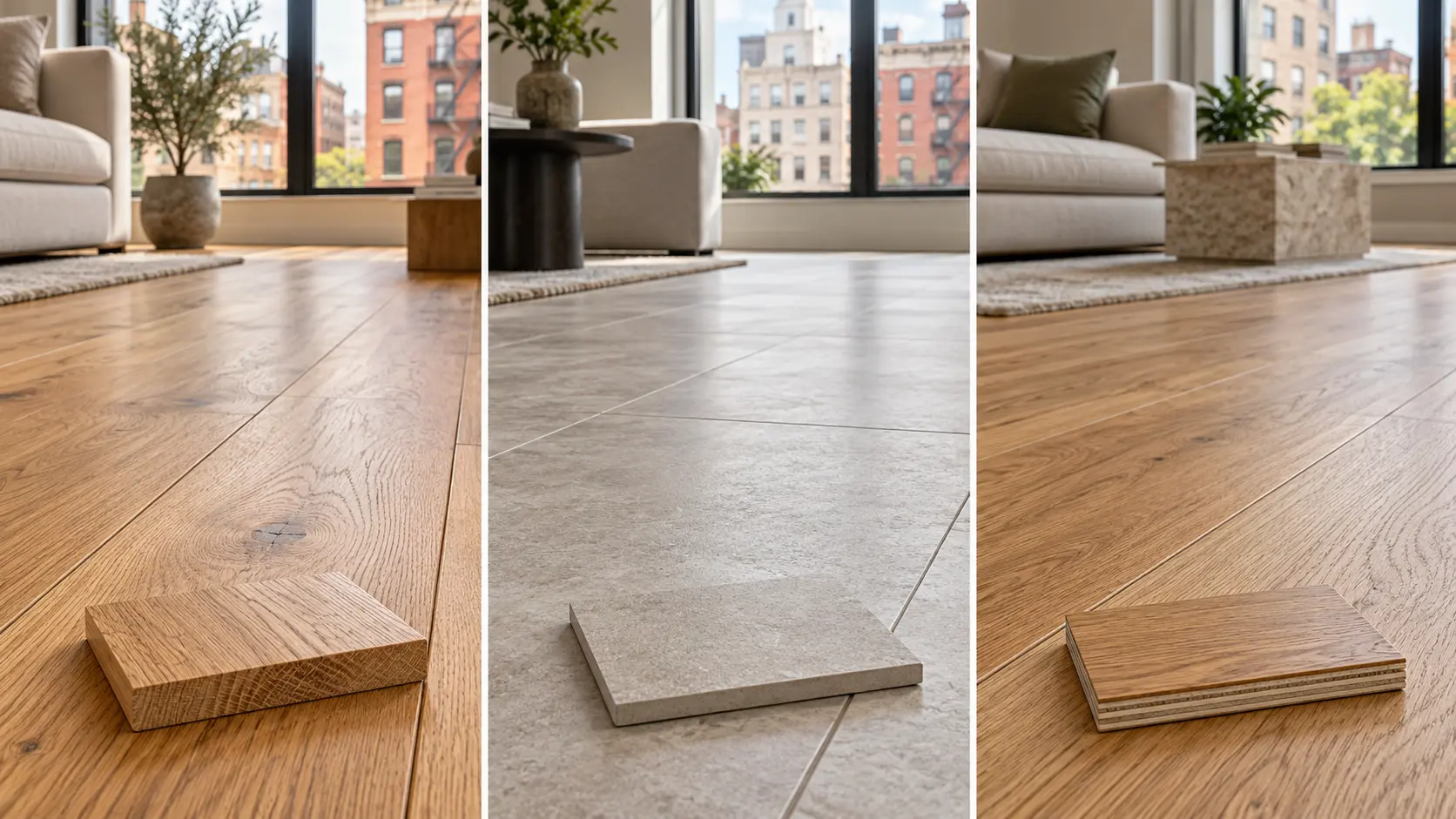
Flooring in New York City has to handle more than foot traffic. Steam heat dries the air in winter, summers turn humid, and many apartments sit on concrete slabs or century-old wood joists. Building rules also limit how much footstep noise can reach the neighbors below. Hardwood, engineered wood, and tile each respond to these conditions in their own way. Solid hardwood suits homes with wood subfloors and steady humidity, engineered wood fits most NYC apartments, and tile works best in kitchens, bathrooms, and entries.
Choosing between them comes down to your building's structure, the room, winter dryness, sound rules, budget, and how long you plan to stay. Flooring is often one of the first decisions in a home interior design in NYC project, and it shapes how every room it touches looks and performs.
Where Hardwood, Engineered Wood, and Tile Each Fit Best
Each material performs best in certain spaces and building conditions:
- Solid Hardwood: Best for living areas and bedrooms in homes with wood subfloors and steady humidity, where long life and repeated refinishing matter most.
- Engineered Wood: Best for most NYC apartments, especially high-rises on concrete, homes with dry steam heat, and anyone who wants wide planks with less movement.
- Tile: Best for kitchens, bathrooms, laundry areas, and entries, and for rooms with radiant floor heating.
How Hardwood, Engineered Wood, and Tile Are Made
Each material is built differently, and that construction explains how it performs in a home.
Solid Hardwood
Solid hardwood is milled from a single piece of wood through its full thickness:
- Construction: One solid board, usually oak, maple, or walnut.
- Installation: Typically nailed or stapled to a wood subfloor.
- Refinishing: Can be sanded and refinished many times.
- Weak Point: Expands and shrinks noticeably as humidity changes.
Engineered Wood
Engineered wood has a real wood top layer bonded to a stable core made of cross-layered plies:
- Construction: A hardwood wear layer on top of plywood or similar layers.
- Installation: Can be glued down, floated, or nailed, depending on the product.
- Refinishing: Depends on wear layer thickness, with thicker layers allowing more sanding.
- Strength: Moves much less than solid wood as humidity changes.
Tile
Tile includes ceramic, porcelain, and stone, but porcelain is the most common choice for floors:
- Construction: A fired clay body, with porcelain being the densest type.
- Installation: Set in mortar over a flat, rigid surface, with grout between tiles.
- Water Resistance: Porcelain is defined by a water absorption rate of 0.5% or less.
- Weak Point: Hard and cool underfoot, and grout needs regular care.
How Each Floor Handles NYC Building Conditions
New York buildings create three challenges that often decide the choice before style does: dry winter air, the structure under the floor, and sound rules between apartments.
Steam Heat and Humidity Swings
Steam-heated buildings often run very dry in winter, while summers bring high humidity. Wood flooring industry guidelines recommend keeping solid wood floors within a relative humidity range of 30% to 50%. Each material reacts differently to these swings:
- Hardwood: Moves the most. Dry winters can open gaps between boards, and humid summers can cause cupping.
- Engineered: Handles swings better, though it still has limits. Humidity that falls below 30% can result in large gaps, splits in the surface, and board distortion.
- Tile: Unaffected by humidity changes.
In steam-heated apartments, engineered wood and tile are the safer choices, and a winter humidifier protects any wood floor.
Concrete Slabs vs Wood Joists
What sits under your floor narrows the options quickly. High-rise and many postwar buildings have concrete slabs. Engineered wood suits these buildings best among the wood options, since it can be glued directly to concrete or floated over it. Solid hardwood usually needs a plywood layer added over the slab first, which raises the floor height. Tile works well on concrete because the slab gives it a rigid base.
Brownstones, townhouses, and many prewar buildings have wood joists and wood subfloors. Solid hardwood is a natural fit because you can nail it directly to the subfloor. Engineered wood also works well. Tile needs extra planning in these homes because older wood floors can flex, and that movement can crack tile and grout unless you stiffen the floor first.
Sound Rules Between Apartments
Footstep noise is one of the most common flooring problems in NYC apartments. The city's building code requires floors between apartments to reach an impact insulation class rating of not less than 50 in lab testing, or 45 if field tested. All three materials are hard surfaces, and each one usually needs a sound-reducing layer underneath in an apartment.
Co-ops and condos often add their own requirements in their alteration agreements. These commonly include:
- Approval Before Work: Board or management sign-off before changing floors.
- Required Underlayment: A specific acoustic underlayment or sound mat below the floor.
- Sound Ratings: Minimum ratings for the finished floor assembly.
- Work Hours: Set times for noisy installation work.
Reviewing your building's alteration agreement before choosing a floor avoids costly removals later.
How They Compare in Everyday Performance
Beyond building conditions, each floor performs differently in daily use. Here's how they compare on the factors homeowners ask about most.
Water Resistance: Tile Leads
Tile, especially porcelain, is the strongest option for kitchens, bathrooms, and entries. Engineered wood tolerates kitchen spills better than solid wood but is still vulnerable to standing water and leaks. Solid hardwood is a poor choice for any bathroom, since water stains and warps the boards.
Cucine Design Co.’s Tile & Stone collection includes porcelain tile and large porcelain slabs, which bring stone-like looks to kitchens and bathrooms without the upkeep of natural stone.
Scratch and Wear Resistance: Tile Leads
Porcelain resists scratches and everyday wear far better than wood. Hardwood and engineered wood both scratch and dent, especially with pets or heavy furniture. Tile has its own weak spot, since a hard impact can crack a tile and it must be replaced individually.
Refinishing: Solid Hardwood Leads
Solid hardwood can be sanded back to fresh wood many times over its life, which removes scratches and lets you change the stain color. Engineered wood can be refinished only as often as its wear layer allows, and thin wear layers may allow light sanding or none at all. Tile doesn't need refinishing, but grout may need cleaning, resealing, or replacement over time.
Lifespan: Solid Hardwood Lasts Longest
A well-kept solid hardwood floor can last 30 to 100 years, compared with 20 to 30 years for engineered wood. Porcelain tile is also very long-lasting when it's installed over a stable, properly prepared base. In practice, how a floor is installed and maintained affects its life as much as the material does.
Radiant Heat: Tile Leads
Tile is the best match for heated floors because it conducts and holds heat well. Many engineered wood products are approved for radiant heat when installed within the manufacturer's limits. Solid hardwood is generally the least suited, since heat speeds up drying and movement.
Comfort Underfoot: Wood Leads
Hardwood and engineered wood feel warm and slightly forgiving underfoot, which suits living rooms and bedrooms. Tile feels cool and hard. That works well in wet rooms but can feel cold in bedrooms without heating or rugs.
Indoor Air Quality
Materials and finishes can affect the air inside a home, and each option has its own considerations:
- Hardwood: Factory-finished boards avoid on-site finishing fumes, while site-finished floors need ventilation during the work.
- Engineered: Products with plywood or fiberboard cores fall under federal formaldehyde rules, and engineered wood flooring producers are covered under the TSCA Title VI formaldehyde emissions regulation. Look for a TSCA Title VI compliance label.
- Tile: Fired tile itself doesn't release emissions, though grout and setting materials should be low-emission products.
How Much Each Flooring Costs to Install in 2026
Installed prices vary widely by grade, size, and layout. National 2026 cost guides put the three options in these ranges:
- Solid Hardwood: About $11 to $25 per square foot installed.
- Engineered Wood: About $9 to $20 per square foot installed, per the same 2026 guide.
- Porcelain Tile: About $15 to $50 per square foot installed, depending on tile size and pattern.
NYC projects often land above national averages. These local factors push costs up:
- Building Logistics: Freight elevator bookings, restricted work hours, and protection of common areas add time.
- Subfloor Work: Leveling old floors or adding plywood over concrete adds labor and materials.
- Sound Requirements: Acoustic underlayments and sound mats add to the material cost.
- Finishing Time: Site-finished hardwood needs extra days for sanding and coating.
Which Flooring Fits Each Type of NYC Home?
Building type often points to the right floor. Here's how the three options usually line up.
Prewar Co-ops
Prewar apartments often have original wood floors, wood subfloors, and steam heat. Engineered wood suits renovations where winter dryness is a concern, while solid hardwood works where the subfloor is sound and humidity can be controlled. Tile belongs in the kitchen and bathroom, and the alteration agreement usually sets the sound requirements.
High-Rise Condos on Concrete
Concrete slabs favor engineered wood that can be glued or floated over an acoustic underlayment. Large-format porcelain also works well, especially in open kitchens and entries where a continuous stone look makes the space feel larger.
Brownstones and Townhouses
Wood joists and subfloors make solid hardwood a natural fit for parlor floors and bedrooms. Tile works well in kitchens and baths once the floor is stiff enough to support it. Single-family homes often have more freedom on sound rules than co-ops.
Lofts
Many lofts have concrete or heavy timber floors and large open spaces. Wide-plank engineered wood or large porcelain slabs suit the scale, and existing concrete floors are sometimes polished and kept as part of the design.
Mixing Flooring Materials Across a Home
Most NYC homes use more than one material, with wood in living areas and bedrooms and tile in kitchens, bathrooms, and entries. Planning the transitions makes that mix look intentional:
- Align Heights: Plan floor build-ups so wood and tile meet at the same level.
- Choose Clean Thresholds: Flush metal strips or thin saddles look neater than raised transitions.
- Coordinate Colors: Pick tile and wood tones that relate to each other.
- Keep Plank Direction Consistent: Run wood planks the same way through connected rooms.
Coordinating flooring with cabinets, finishes, and lighting is part of good home interior design in NYC. Cucine Design Co. plans floor materials together with the full design, which keeps each room connected to the next.
Choosing Flooring as Part of Home Interior Design in NYC
Flooring affects cabinet heights, door clearances, color palettes, and building approvals, which is why it works best as an early decision in any home interior design in NYC project. Answering a few questions narrows the choice:
- What Is Under the Floor?
Concrete favors engineered wood or tile, while wood subfloors open up solid hardwood.
- How Dry Does Your Apartment Get?
Steam heat and dry winters favor engineered wood or tile.
- Which Rooms Get Wet?
Kitchens, bathrooms, and entries call for tile.
- What Does Your Building Require?
Co-op and condo rules may set underlayment and sound standards.
- How Long Will You Stay? Long-term owners benefit from solid hardwood's refinishing life or durable porcelain.
- Do You Want Radiant Heat?
Tile performs best, with engineered wood as a second option.
Frequently Asked Questions
Is engineered wood better than hardwood for NYC apartments?
In many cases, yes. Engineered wood moves less with humidity changes and can be glued or floated over concrete slabs, which suits steam-heated and high-rise apartments. Solid hardwood is still a strong choice in homes with wood subfloors and steady humidity.
Which is cheaper, hardwood, engineered wood, or tile?
Engineered wood is usually the least expensive of the three when installed, with solid hardwood next. Porcelain tile has the widest range, from moderate to the most expensive, depending on tile size, pattern, and labor.
How long does each type of flooring last?
Solid hardwood can last 30 to 100 years with care, while engineered wood typically lasts 20 to 30 years. Porcelain tile also lasts for decades when installed over a stable base.
Can you put hardwood floors in a bathroom?
No, solid hardwood isn't a good fit for bathrooms. Water and humidity can stain and warp the boards. Porcelain tile is the better choice for any bathroom floor.
Which flooring is quietest for apartments?
All three need help with impact noise in apartments. Wood and engineered floors are usually installed over acoustic underlayment, and tile often needs a sound mat below the mortar. NYC's building code sets minimum impact sound ratings between apartments, and many co-ops add their own rules.
Does steam heat damage wood floors?
It can. Steam heat dries the air in winter, and wood shrinks when humidity drops, which opens gaps and can cause splits. Running a humidifier and choosing engineered wood both reduce the risk.
Is porcelain tile waterproof?
Porcelain is highly water-resistant, with a water absorption rate of 0.5% or less. Grout lines and the layers below still need proper waterproofing in wet areas like showers.
Can engineered wood be refinished?
Yes, as long as the wear layer is thick enough. Thicker wear layers can be sanded more than once, while thin ones may allow only light refinishing or none at all.
Do I need building approval to change floors in a co-op?
Most co-ops require approval for flooring changes, especially when switching from carpet to hard flooring. Alteration agreements often specify underlayment and sound standards, so review them before choosing a material.
Takeaway
Hardwood, engineered wood, and tile each have a clear place in NYC homes. Solid hardwood offers the longest life and many refinishing options but needs a wood subfloor and steady humidity. Engineered wood gives real wood looks with better stability and installs easily over concrete, which makes it the most flexible option for many apartments. Porcelain tile leads in kitchens, bathrooms, entries, and heated floors. Your building's structure, steam heat, sound rules, budget, and the way each room is used should guide the final choice.
At Cucine Design Co., flooring is planned as part of the whole space. Our Tile & Stone collection includes porcelain tile, large-format porcelain slabs, marble tile, and fluted terrazzo for kitchens, bathrooms, and entries. Our design team coordinates those materials with cabinetry, fixtures, and finishes across full homes, kitchens, bathrooms, and closets.
Our showroom lets you compare materials side by side before you decide. Call (212) 763-6639 or get a free estimate to plan flooring that works for your NYC home.