
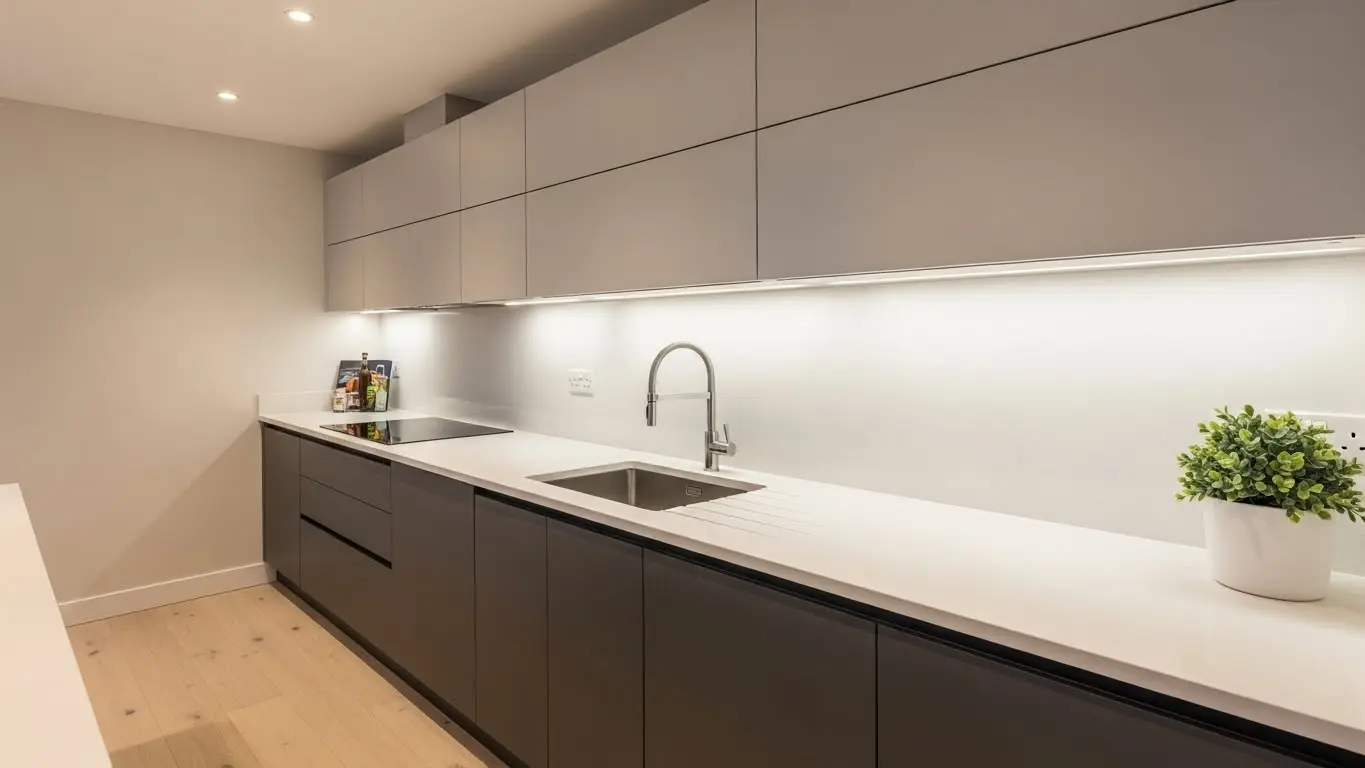
Choosing kitchen cabinets and kitchen countertops is one of the most important decisions in a kitchen remodel. These two elements account for 40-60% of your total budget and literally set the stage for everything else: your backsplash, flooring, hardware, and even that statement light fixture you've been eyeing.
Get this pairing right, and your kitchen feels cohesive and intentional. Get it wrong, and you're living with regret every time you make coffee.
The stakes are high because you're not just picking materials, you're making decisions you'll live with for at least a decade, possibly two.
Unlike throw pillows or wall paint, cabinets and countertops aren't easy or cheap to change on a whim. That's why understanding the fundamentals of how to choose and pair these elements is crucial before you set foot in a showroom.
Start With Countertops First
Most people would pick cabinets first, but you should start with the countertop.
Why?
Natural stone materials like granite and marble come with inherent color variations and veining patterns that you can't control. Each slab is unique, and what you see is what you get.
Your cabinets, on the other hand, can be selected from thousands of finishes, stains, and paint colors to complement whatever countertop you choose. It's much easier to find a cabinet color that works with your dream granite slab than to find the perfect granite to match the cabinets you've already ordered.
What Countertop Material Options Do You Have?
1. Granite
Granite has been the gold standard for decades. Each slab is completely unique, quarried from different parts of the world, with colors ranging from subtle neutrals to dramatic veining that looks like natural artwork. It's heat-resistant enough to handle hot pans, incredibly durable, and adds resale value to your home.
The tradeoffs? Granite is porous, which means it needs sealing every 10-15 years to prevent stains. The stone itself is heavy, and prices vary dramatically.
2. Quartz
Engineered from about 90% natural quartz (one of Earth's hardest minerals) and 10% resins, it delivers the look of natural stone. It's non-porous, it resists stains and scratches better than most natural stones, and comes in virtually any color or pattern imaginable.
Quartz is also slightly less heat-resistant than granite; hot pans directly from the oven can potentially damage it, so trivets are non-negotiable.
3. Marble
There's something undeniably luxurious about marble’s soft, veined appearance that instantly elevates any kitchen. The stone is naturally cool, which bakers love for rolling dough and working with pastry.
But marble is high-maintenance. It's softer than granite and quartz, making it prone to scratches. It's porous and stains easily; red wine, coffee, and oil can leave permanent marks. Acidic substances like lemon juice, vinegar, or tomatoes will etch the surface, creating dull spots that can't be buffed out. Marble needs sealing every six months, and even then, you're accepting that wear and tear are part of the material's character.
4. Butcher Block
Wood countertops bring warmth and organic texture that stone simply cannot match. Butcher block comes in various wood species, such as maple, walnut, cherry, and oak, each with distinct grain patterns and colors. The surface is softer and more forgiving than stone, making it gentler on dishes and quieter when you're chopping.
When the butcher block gets scratched or stained, you can sand it down and refinish it. It's one of the few countertop materials that improves with proper care rather than deteriorating.
Wood requires regular oiling, though. Typically, every few weeks initially, then monthly once a protective finish builds up. Without proper sealing and maintenance, water damage becomes a real issue.
5. Laminate
Don't write off laminate just because it was your grandmother's kitchen countertop. Today's options use high-resolution photography and textured finishes to convincingly mimic stone, wood, or even concrete at a fraction of the cost. Some are genuinely difficult to distinguish from the real thing until you touch them.
Laminate is budget-friendly, easy to clean, and available in hundreds of colors and patterns. It's lightweight, doesn't require sealing, and can be installed quickly.
However, once the laminate is deeply scratched, burned, or chipped, there's no repair option.
Also Read: Quartz vs. Granite Countertops: Which Is Right for Your Kitchen?
How to Select Your Cabinets
Once you've chosen your countertop, it's time to think strategically about cabinets.
Quality Indicators
Quick-ship cabinets from big box stores often use particle board or MDF (medium-density fiberboard) with a thin veneer. These materials break down faster, especially in humid environments or near water sources. The hardware is typically lower quality, leading to sagging doors and sticky drawers within a few years.
Custom or semi-custom cabinets cost more upfront but use better materials and construction methods that justify the investment:
Construction materials include:
- Solid wood or plywood: These materials are stronger, more moisture-resistant, and last for decades. Plywood, in particular, resists warping better than solid wood.
- Avoid particle board: It swells and crumbles when exposed to moisture, which is inevitable in kitchens.
Joinery:
- Dovetail joints in drawers create interlocking strength that holds up to heavy loads and constant use.
- Pocket screws or staples are signs of lower quality that won't last.
Hardware:
- Soft-close hinges and drawer slides aren't just luxury features—they extend cabinet life by eliminating the stress of slamming. Once you experience them, regular cabinets feel primitive.
- Side-mounted drawer glides (also called undermount) are more durable than bottom-mounted single-rail systems.
- Full-extension drawers allow complete access to items in the back. Partial extension saves money but sacrifices functionality.
Frame Construction:
- Frameless cabinets maximize interior space and suit modern aesthetics.
- Framed cabinets have a face frame that adds structural support and works better in traditional designs.
Storage Considerations
Cabinets are pointless if they can't store what you actually own. Before falling in love with a style, conduct an honest inventory of your kitchen items.
- Deep drawers near the stove for pots, pans, and lids
- Vertical dividers for baking sheets, cutting boards, and cooling racks
- Pull-out shelves in lower cabinets for easy access to heavy items
- Dedicated spice storage such as pull-out racks or drawer inserts
- Appliance garages with pocket doors or tambour doors
- Deep lower cabinets with outlets for stand mixers, food processors, and blenders
- Consider a coffee station or smoothie bar in your pantry
Cabinet Style and Finish
Cabinet style needs to complement both your countertop and your overall kitchen aesthetic. Some popular options include:
- Shaker Style: Clean lines with a recessed center panel. Works in both traditional and modern kitchens, depending on finish and hardware.
- Flat Panel (Slab): Completely flat doors with no ornamentation. Sleek, modern, and minimalist.
- Raised Panel: Traditional style with a raised center panel. Adds dimension and works well in classic, country, or transitional kitchens.
- Glass Front: Upper cabinets with glass inserts display dishes or glassware. Creates visual interest but requires keeping contents organized.
Making Countertops and Cabinets Work Together
Now, how do you make your kitchen cabinets and kitchen countertops complement each other instead of competing?
Rule #1: Create Contrast
The biggest mistake in kitchen design is going matchy-matchy. Cabinets and countertops in similar tones create a flat, monotonous look that makes the space feel smaller and less interesting.
The solution is contrast. Dark cabinets need lighter countertops. White or cream cabinets need darker or bolder countertops. This contrast defines the workspace and makes your kitchen feel larger.
Rule #2: One Star, One Supporting Role
Your kitchen needs a focal point. Either your cabinets OR your countertops should be the showstopper, never both.
If you've chosen granite with bold colors or striking patterns, keep cabinets simple and neutral. Let that stone be the artwork. White, cream, gray, or light wood cabinets provide the perfect backdrop.
If you're going with painted cabinets in jewel tones or rich dark stains, pair them with understated countertops. Solid white quartz, subtle granite with minimal veining, or light marble-look surfaces let your cabinets shine.
Rule #3: Understand Undertones
Every color has undertones: warm (yellow, red, orange), cool (blue, green, purple), or neutral.
A white cabinet might have:
- Warm yellow undertones (like cream or vanilla)
- Cool blue undertones (like pure white or gray-white)
- Neutral undertones (true white with no color cast)
Your countertop needs compatible undertones, or the pairing will feel off even if you can't articulate why.
- Warm wood tones (honey oak, cherry, maple with golden stain) pair beautifully with warm stones, beige, cream, tan, or granite with golden and brown flecks.
- Cool wood tones (gray-washed oak, espresso, painted gray) work with both warm and cool stones, depending on your desired atmosphere.
- White cabinets are trickier than they seem. Warm whites need countertops with warm undertones. Cool whites need countertops with cool or neutral undertones.
Rule #4: Consider the Full Picture
Kitchen cabinets and kitchen countertops don't exist in isolation. They need to work harmoniously:
Flooring: Dark hardwood floors must be balanced with lighter countertops. Light floors give you more flexibility with cabinet and countertop colors.
Backsplash: Your backsplash should complement both without competing. If you have bold countertops, keep the backsplash simple.
Hardware: Cabinet hardware should align with your overall style. Brushed nickel and chrome read modern. Oil-rubbed bronze and brass feel traditional. Matte black is contemporary and trending.
Appliances: Stainless steel appliances are neutral and work with most cabinet-countertop combinations. Black stainless, white, or panel-ready appliances integrated into cabinetry create different looks.
Your Action Plan
Ready to make this happen? Here's your step-by-step approach:
1. Set a realistic budget
Allocate 10-20% of your total kitchen budget specifically for countertops and 30-40% for cabinets. Add a 10-15% buffer for unexpected costs (they always happen). Know your absolute maximum before falling in love with materials.
2. Research countertop materials
Read about each material's pros and cons. Visit multiple showrooms to see slabs in person since photos don't capture the depth and variation of natural stone.
3. Be honest about your lifestyle
Are you meticulous about maintenance or more relaxed? Do you cook elaborate meals daily or mostly reheat takeout? Do you entertain frequently? Your honest answers should drive material choices.
4. Assess your storage needs
Walk through your current kitchen and note what frustrates you.
- Not enough space for pots and pans?
- No dedicated spot for small appliances?
- Disorganized spice situation?
Make a list of must-haves for your new cabinets.
5. Get samples and test at home
Bring home samples of your top countertop choices. Place them in your actual kitchen space. Look at them under different lighting conditions throughout the day. See how they look next to your flooring, appliances, and any elements you're keeping.
6. Select complementary cabinets
Choose cabinet styles and finishes that create appropriate contrast with your countertop finalists.
7. Test before committing
If possible, see installed examples of similar pairings in real kitchens. Ask to visit completed projects or look for examples in model homes.
8. Work with professionals
Unless you have design training, consult with a kitchen designer or design-build firm. They've seen hundreds of kitchens and can steer you away from mistakes you wouldn't predict.
The Final Word (and Where to Find Expert Help)
Choosing kitchen cabinets and kitchen countertops doesn't have to be overwhelming.
Yes, there are guidelines: create contrast, prioritize function over trends, understand undertones, don't go bold-on-bold. But ultimately, your kitchen should work for your life, not just look good in photos.
The right combination is about durability when you're cooking daily, storage that makes sense for how you use your space, and a design that still feels right five, ten, even fifteen years from now.
If you're in NYC and want expert guidance on pairing materials, maximizing your space, and creating a kitchen that's both beautiful and genuinely functional, Cucine Design NYC specializes in exactly that.
We help turn the complexity of material selection, cabinet configuration, and design coordination into a straightforward process that results in a kitchen you'll actually love using every single day.
Because at the end of the day, your kitchen should work as hard as it looks good. Contact us today for a quote or to discuss your renovation plans.