
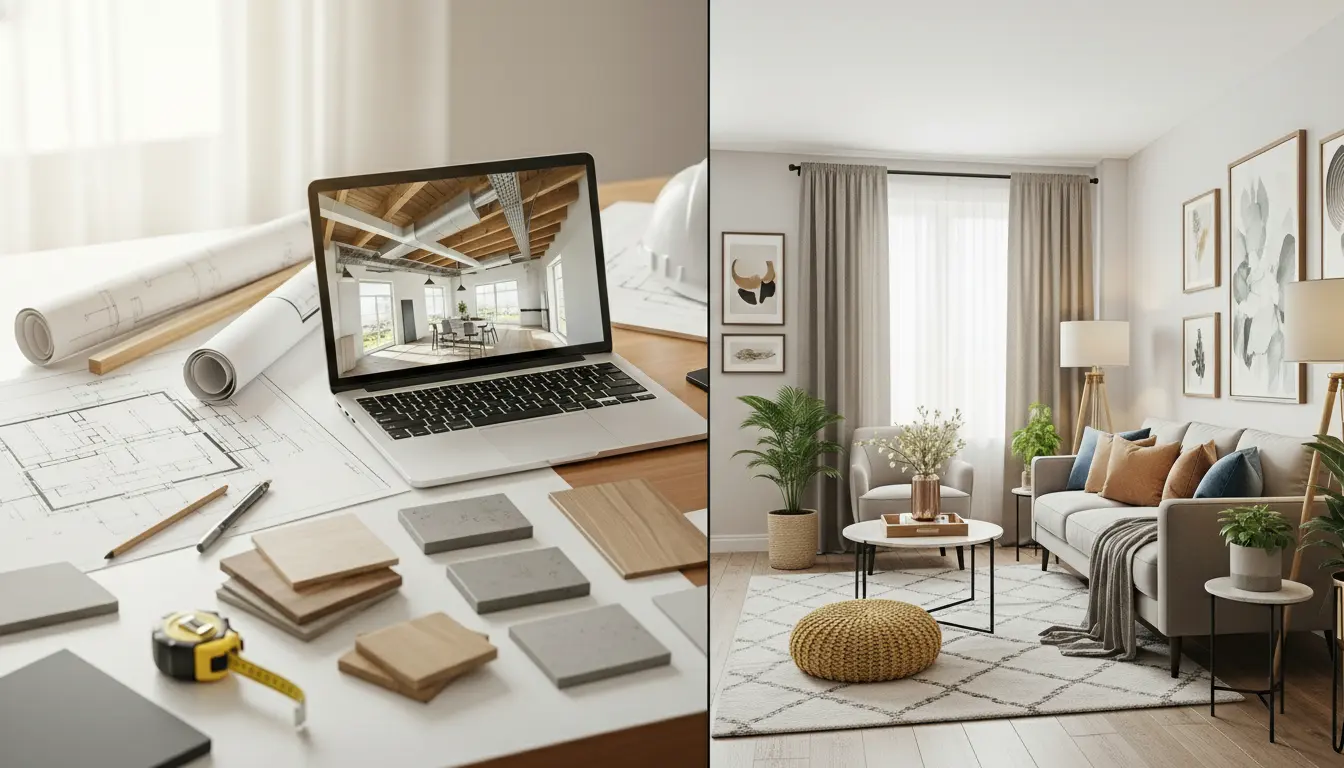
Alexa had dreamt of this since her college days. After years of hostel days, rental apartments, and Pinterest boards full of ideas saved in “Dream Home” collection, she is finally in her very own house. The rooms echoed with emptiness. But every corner was already full in her mind.
She had plans. Big ones. The kitchen would be in all cool tones so that cooking becomes her hobby. A reading corner close to the window with fairy lights and floor cushions, as she loved reading. A similar pendant light over the dining table, she saw last summer in Sasha’s house. And a gallery wall in the hallway with frames collected from thrift stores and memories collected from life was her real wish.
But then, real questions started.
“Should I knock down the wall between the kitchen and living room?”
“Can I build a bookshelf into that weird little area next to the bathroom?”
“Would wallpaper make the space look nice or busy?”
She had all in mind, but will this actually look good? Who can help me decide this?? Do I need an interior decorator for this? Or an interior designer?
And that’s where the confusion hit her because aren’t interior designers and decorators kind of the same thing?
And while Alexa's story is about her home, these same questions come up for cafes, clinics, offices, and anywhere people care about how a space works and feels.
Both decorators and designers make spaces beautiful, right?
Well, not quite.
In this blog, we’ll break it down clearly: what interior designing is and what interior designers do, what interior decorating is and what interior decorators do, and how to know which one you actually need.
The Real Difference Between Design and Decorating
Most people use “interior design” and “interior decorating” interchangeably. But we don’t blame them at all. The line between the two can feel blurred because the final result seems similar. Designers can decorate, but decorators can’t design. Decoration involves working with existing structures to enhance visual appeal without structural changes. On the other hand, design involves scientific and artistic understanding of creating functional spaces according to building codes and regulations.
What is Interior Design?
When Alexa thought about removing the kitchen wall, it wasn’t only for Instagram-worthy brunch photos or a wider kitchen space.
She wanted to feel less boxed in.
She wanted to chat easily with guests while cooking.
She wanted more natural light.
But none of that can happen safely or legally without understanding what’s behind that wall.
That’s where you need an interior designer.
Interior designers don’t just work with color and style. They work with structure, safety, and how humans interact with their environments. They are certified or degree-holding professionals. They are the ones who can look at a floor plan and say, “Nope, that’s a load-bearing wall” or “Yes, we can move the kitchen island three feet to the left, but we’ll have to reroute the plumbing.”
They are like architects of the indoors.
Principles of Interior Design
A professional designer keeps these in mind throughout the project:
- Balance:
Balance is the equal distribution of visual weight to create a sense of equilibrium. This can be done in any way, but the purpose is to avoid space looking too heavy or too empty.
- Harmony:
Harmony is giving a sense of unity to the whole place, but that doesn’t mean everything looks the same or boring. All elements from flooring to texture should feel like they belong together.
- Rythm:
Rhythm is created by repetition, progression, or transition to guide the eye through the space and create visual movement. Visual patterns that look smooth across the whole plane are used.
- Emphasis:
Emphasis means keeping a point that you can say as the focal point or star of a place. It’s like a point where your eyes go first.
They use it to anchor the room and arrange everything else around it.
- Proportion and Scale:
The relationship between the size of objects and the space they occupy ensures they fit harmoniously. Items chosen not only look good but fit well.
They would never pick a huge sofa for a tiny apartment or a tiny rug next to a massive bed.
- Functionality:
A space should be functional too, not just beautiful. That’s the most important principle that separates a designer from a decorator.
What Do Interior Designers Do?
- Space Planning: Should the hallway be widened? How do we make the living room more walkable? Which room can have a little extra space by combining it with the hallway?
- Structural Analysis: Is it safe to open this wall? Can we build storage into this space without compromising ventilation?
- Technical Layouts: Where should electrical outlets be placed? How should lighting be wired to avoid shadows and glare?
- Custom Solutions: Designers help you with creating creative stuff as required in your space instead of using the generic ones.
- Compliance: They make sure your space meets legal and safety regulations, even if they are accessibility standards or any other regulations.
In short, if your home were a cake, the designer is like an expert baker who ensures the layers are baked perfectly, stacked straight, and structurally sound before asking his junior for frosting it.
What is Interior Decorating?
The designer’s work is done at Alexa’s home. The wall is gone. Rooms are reshaped. She got a brighter, more open space.
It’s totally functional, but still not the way she always imagined.
That’s when the decorator steps in with arms full of fabric swatches, paint samples, and throw pillow ideas.
Interior decorators focus on how a space feels. You can call them the masters of ambiance. They understand that a room painted burnt orange will give cozy vibes, while icy blue creates calm in summer. They play with colors and texture on all your stuff.
Principles of Interior Decorating
- Color Psychology: Colors should flow well from one room to another because colors make or break the mood.Using soft colors where a calm vibe is required and earth tones for warmth is a common practice.
- Texture Layering: Texture layering is done to add depth and dimension. Texture is what keeps a room from feeling flat.
- Style Cohesion: A consistent style or blend of styles that relates is necessary. Whether it’s modern, old school, or bohemian, everything should feel like it speaks the same language. Otherwise, the space will feel cluttered.
- Personalization: Best decorated spaces feel loved to live in and personal. Personalization includes favourite colors, family photos or artworks, and curating spaces for your hobbies, etc.
What Do Decorators Do?
- Understand your Style: Decorators start by understanding who you are and how you use your place. Your habit shapes the decoration decisions they make.
- Visual Planning: Decorators create a color and style story that ties the whole space together. They create a cohesive theme, and the goal is to avoid everything that feels off.
- Select the Right Pieces: From sofas to lamps to the rug under your feet, decorators help source pieces that fit your space, reflect your taste, and work within your budget.
- Style the Space: Once everything is in place, they arrange furniture, add rugs and artwork, and place accessories until the room feels balanced, inviting, and beautiful.
- Add Meaningful Touches: They find ways to incorporate your memories and personality in a way that doesn’t feel random or cluttered but intentional and charming.
If a designer builds the stage, the decorator sets the scene. They turn a blank canvas into a painting that looks like you.
Why do you need a Decorator and Designer?
Let’s take Alexa’s apartment as an example and imagine her trying to do both jobs herself.
Scenario 1: Without a Designer
She saw a beautiful sofa online, ordered it on urgent delivery, only to find it couldn’t even pass through her front door.
She wanted an open space, so she knocked down the wall only to find out it was load-bearing.
She installed the lights she saw at her friend's house, but they flicker because the wiring is overloaded.
Suddenly, the dream space turned into a DIY disaster.
Scenario 2: Without a Decorator
Her rooms are well laid out and functional, but feel cold and not what she dreamt of.
The lighting is too harsh. Furniture isn’t going well with the walls and curtains.
Guests come over and say nice things, but she knows something’s missing.
The magic happens when both professionals collaborate.
Should I Hire a Designer or Decorator?
It’s something you need to know whether you are building a new office, setting up a studio, designing a customer-friendly retail space, or even a homeowner; knowing the difference between a designer and a decorator will save you lots of time, money, and headaches.
This is the question most people ask, and that is a must-ask one: “Do I need a designer, a decorator, or both?”. It depends on what you are trying to achieve because many interior designers can decorate your space, too. They can handle both the structure and the styling. But it doesn’t work the other way around. Decorators aren’t trained or legally allowed to do structural work.
So, if your project involves both function and form, a designer may be your one-stop solution.
When to Choose an Interior Designer?
- You want some construction or structural changes.
- You want custom cabinetry or features.
- You need to move plumbing, electricity, or HVAC.
- You are starting your home from scratch.
- Your space doesn’t function well for your lifestyle.
When to Choose a Decorator?
- Your space works, but it’s not the way you want it.
- Your furniture choices are off and don’t look good in the house.
- You want help choosing colors, curtains, or art.
- You are moving in and want it to feel like home.
Knowing the Difference Saves Your Time, Money, and Energy
“I didn’t know I needed that.”
It’s the most expensive phrase in the process of home improvement.
When you hire the wrong person or try to DIY something meant for a pro, you waste a lot of everything below.
Money
Hiring a decorator for design work is like paying for things they legally or technically can’t do. Hiring a designer when you only need help picking cushions is also a waste.
Time
Choosing the wrong professionals is like walking in the wrong direction, so you surely have to start over. No one wants that mid-renovation.
Energy
Home projects are stressful enough. The last thing you need is confusion about who does what.
Knowing the difference helps you plan smarter, spend wiser, and sleep better.
How Do You Find the Right Decorator or Designer?
Whether it’s a designer, a decorator, or a dream team of both, here’s what to look for:
Portfolio:
Ask for photos of past work. Do you vibe with their style?
Credentials:
Do they have certifications or education in interior design?
Reviews & Testimonials:
What do past clients say?
Understanding Your Vision:
Do they get you? Can they balance trends with your personality?
Transparency About Budget:
Can they work within your budget, or are they always pushing for upgrades?
Alexa’s Apartment Final Reveal
Now that you know everything about designers and decorators, revisit Alexa one last time. With her new understanding, she hired an interior designer. They helped her:
- Remove the kitchen wall safely.
- Install custom cabinetry.
- Create a better layout for airflow and natural light.
- Choose finishes that were both functional and stylish.
Then, she brought in a decorator after a few months who:
- Helped her choose earth-toned colors for the wall.
- Found a vintage dining table that fits perfectly.
- Styled her shelves with a mix of new and meaningful items.
- Turned her reading corner into her favorite spot in the house.
A designer could have done this stuff, too, but things got out of budget for Alexa at that moment. She just hired a decorator after a few months, not a fully certified interior designer again.
Now her home is a sanctuary. People walk in and say, “Every corner of this home gives you kinda vibes.” Because it is what she dreamt of.
Are you Looking for a Designer or Decorator?
Whether you are moving into your first apartment, renovating your forever home, or just craving a fresh new look for your house.
Ask yourself:
- Is your space working for your lifestyle?
- Do you feel at home when you walk through the door?
- Are you craving function, beauty, or both?
Once you know what you need, the rest falls into place.
Cucine Design NYC can help You with Both
At Cucine Design NYC, we get it. We understand how overwhelming it can be to turn a space into a dream space. That’s why we don’t just offer one thing; we offer both design and decoration.
Whether you need:
- A full-scale remodel with layout changes, lighting planning, and any custom features.
- A cozy redecoration that reflects your personality
We have got the experience, creativity, and passion to bring it to life. Ready to Transform Your Space?