
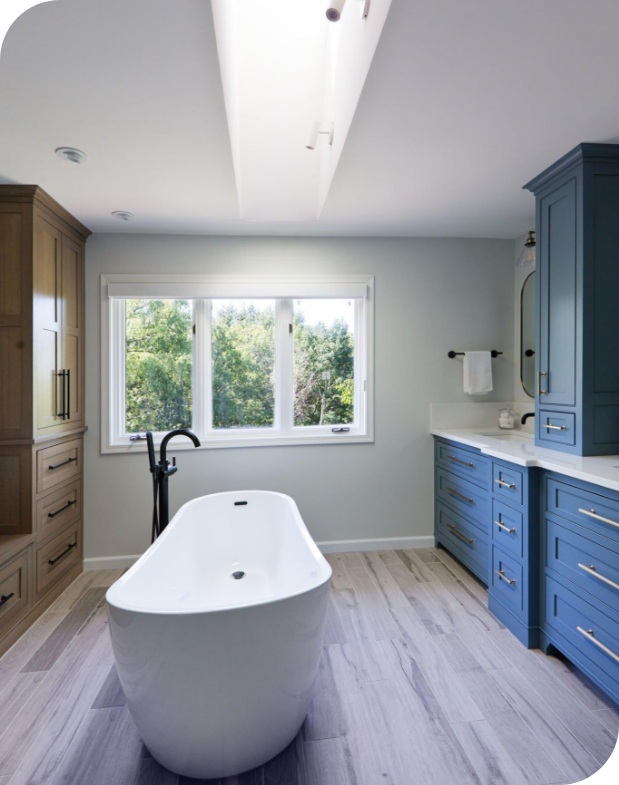
Many luxury bathroom renovations cost a great deal and still disappoint in daily use. The budget often goes into features that look impressive in photos, such as a statement tub or a marble wall, while the shower stays cramped and the lighting stays flat. As a result, the bathroom looks expensive but feels ordinary. Real luxury comes from ideas built around how the room is used every day.
The best luxury bathroom ideas are a larger walk-in or curbless shower with thermostatic controls, a floating custom vanity with built-in storage, layered lighting with a backlit mirror, natural stone or large-format porcelain surfaces, radiant floor heat, and a freestanding soaking tub where space allows. Smart toilets, heated towel rails, and quality fixtures complete the experience. For bathroom renovations in NYC, the strongest ideas are the ones that also fit the building’s plumbing, wiring, and alteration rules.
What Makes A Bathroom Feel Luxurious Today
Luxury in the bathroom now centers on everyday comfort more than display. Homeowners are investing in the features they use most, from the shower to the vanity.
Recent survey data shows median bathroom spend rebounding to $15,000, with nearly half of homeowners making their showers bigger. Design professionals report the same direction, with 77% expecting hospitality-inspired wellness design to shape primary baths.
This focus matters even more in bathroom renovations in NYC, where every square foot needs a clear purpose. Each idea in this guide follows the same approach, beginning with the overall design direction.
Luxury Style Directions to Build the Room Around
Every luxury bathroom works best with one clear design direction. Choosing it early keeps materials, fixtures, and lighting consistent from start to finish:
- European Minimalist: Handleless vanities, wall-hung fixtures, large porcelain slabs, and hidden storage create a calm, gallery-like room. Minimal visual clutter allows each material to stand out.
- Classic Marble Bath: Carrara or Calacatta marble, polished nickel fixtures, framed mirrors, and paneled cabinetry suit prewar apartments and brownstones. This style feels timeless and refined.
- Warm Spa Retreat: Wood-faced vanities, soft stone tones, matte finishes, and natural light create a relaxed, resort-like atmosphere.
- Modern Dramatic: Dark stone, matte black or brushed brass fixtures, and moody lighting give the room a bold, boutique-hotel character. This style depends on a strong lighting plan from the beginning.
Most luxury bathrooms follow one main direction and add a few accents from another.
Layout Ideas That Make the Room Feel Larger
A thoughtful layout often adds more to a luxury feel than any single fixture. These planning ideas shape how the bathroom flows and how private it feels:
- Private Toilet Room: Placing the toilet in its own enclosed space keeps the rest of the bathroom open and calm. This works well in larger primary baths with room for a separate door.
- Separate Wet and Dry Zones: Grouping the shower and tub behind glass keeps water away from the vanity and floors. The dry side stays cleaner and feels more like a dressing area.
- Barrier-Free Design: Curbless entries, a built-in bench, wider doorways, and discreet grab bars keep the bathroom safe at every age. When planned well, these features look refined and blend into the design.
- Natural Light With Privacy: Frosted glass, privacy film, or top-down shades let daylight in while keeping the room private. That balance matters in city buildings where windows often face neighbors.
Layout decisions are the hardest to change later. Settling them early protects every other choice in the room.
Luxury Shower Ideas
The shower is usually the priority in a luxury budget because it is the most-used part of the room.
Go Bigger and Open the Entry
Enlarging the shower is one of the most effective ways to make the whole bathroom feel more spacious. Frameless glass keeps sightlines open, while low-curb and curbless entries create a clean, continuous floor. A linear drain along one wall allows the floor to slope in one direction. Large tiles can then run straight into the shower without breaks.
Curbless showers require a recessed or carefully sloped subfloor. In some New York buildings, the concrete slab limits how much the floor can be lowered. An early design review confirms whether a fully curbless entry is possible or a low curb is the better option.
Build a Layered Shower System
A luxury shower usually combines a ceiling-mounted rain head, a handheld shower, and in some cases body sprays. Thermostatic valves hold the water at your chosen temperature, even when another tap is in use. Separate volume controls let each outlet run alone or together with the others.
Additional outlets do not have to increase water use. Standard showerheads use 2.5 gallons per minute, while WaterSense labeled models use no more than 2.0 gallons per minute. Choosing labeled models can save an average family about 2,700 gallons a year.
Add Steam for a Spa Experience
A steam shower brings a spa-level wellness feature into the home. It requires a fully sealed enclosure, glass that reaches the ceiling, a vapor barrier behind the tile, and a sloped ceiling to prevent condensation from dripping. The steam generator also needs its own electrical circuit and an accessible location nearby, such as a vanity cabinet or closet.
Plan Built-In Niches and a Bench
Recessed niches keep bottles off the floor and out of sight. A floating stone bench or fold-down teak seat adds comfort for shaving and stretching. Grab bars finished to match the fixtures provide support while blending into the design.
Bathing Ideas That Turn the Room Into a Retreat
A freestanding soaking tub remains one of the strongest signs of a luxury bathroom. Sculpted acrylic and composite stone models suit most apartments. Solid stone tubs are much heavier once filled and often require a structural review in older buildings.
In a narrow bathroom, a wet room can place the tub inside the shower zone behind a single glass panel. Wet rooms now appear in 18% of bathroom renovations, up from 13% a couple of years ago. For shorter rooms, a deep Japanese-style soaking tub offers a similar experience in a smaller footprint.
Vanity and Storage Ideas With a Custom Finish
The vanity shapes the style of the bathroom more than any other piece. A well-designed vanity pairs a high-end look with storage that keeps counters clear:
- Floating Vanity: A wall-mounted vanity shows more of the floor, simplifies cleaning, and gives the room a lighter, modern look. Strip lighting underneath adds a soft glow at night.
- Double Vanity or Extended Counter: Two sinks ease morning routines in a shared primary bath. In a single-sink layout, a longer counter can create space for a seated grooming area.
- Integrated Stone Sinks: A basin carved or molded into the countertop creates one continuous surface with fewer joints to clean.
- Recessed Medicine Cabinets: Mirrored cabinets set into the wall, with interior lighting and outlets, keep toiletries and chargers out of sight.
- Drawer Organizers and Hidden Outlets: Custom dividers give every item a defined place. In-drawer outlets keep hair tools plugged in and ready to use.
At Cucine Design Co., clients can open drawers, test faucets, and compare finishes from brands we work with inside our bath showroom before placing any order.
Lighting That Makes the Space Feel High-End
Lighting affects how every material in the bathroom looks. Design professionals agree, with 91% ranking lighting quality as a top priority in bath design. A luxury lighting plan usually layers several sources:
- Recessed ceiling lights for overall brightness
- Vertical sconces or a backlit mirror at face level
- Under-vanity strip lighting for nighttime use
- Dimmers and adjustable color temperature
- Soft lighting inside the shower niche
Light at face level matters most. Overhead fixtures alone cast shadows that make shaving and makeup more difficult.
Surfaces and Finishes That Stay Beautiful for Years
Materials define the character of a luxury bathroom long after the first impression. Each option offers a different balance of beauty and upkeep:
- Natural Marble and Stone: Book-matched marble slabs on a feature wall create a focal point that tile cannot replicate. Marble requires sealing and gentle cleaners. It performs best on walls and in areas with lighter wear.
- Large-Format Porcelain Slabs: Porcelain can closely resemble marble with much less maintenance. Larger slabs mean fewer grout lines and a cleaner finish.
- Warm Wood Tones: A wood-faced vanity softens stone and tile, adding warmth to an otherwise cool space.
- Textured Details: Fluted vanity fronts, ribbed glass, and handmade tile accents add depth while keeping the overall design simple.
- Coordinated Metal Finishes: Brushed brass, polished nickel, and matte black all create a high-end look. Limiting the room to one or two finishes across faucets, hardware, and lighting keeps the design cohesive.
A restrained palette with one standout material usually looks more refined than several finishes competing for attention.
Comfort and Smart Features Worth Adding
Many valued luxury features stay out of sight until they are in use. Most of them require no additional floor space:
- Radiant Floor Heating: Electric heating mats beneath the tile warm the floor on cold mornings. A programmable thermostat can have the floor warm before you wake up.
- Heated Towel Rails: Warm, dry towels bring hotel-level comfort to daily routines. The rails also help towels dry faster in a humid room.
- Smart Toilets and Bidet Seats: Heated seats, built-in bidets, and automatic lids are becoming popular in both primary and guest bathrooms.
- Wall-Hung Toilets: An in-wall tank frees up floor space and keeps the floor clear for easy cleaning. The wall must have enough depth for the carrier frame.
- Digital Shower Controls: Preset temperatures and flow settings let each person start the shower exactly as they prefer.
- Quiet Exhaust Fan With Humidity Sensor: Strong, quiet ventilation protects stone, wood, and paint from long-term moisture damage.
Many of these features need dedicated wiring. Planning them before the walls are closed avoids costly changes later.
Small Details That Feel Like a Five-Star Hotel
Hotel bathrooms feel luxurious because every small detail has been considered. A few finishing touches bring the same experience into your home:
- Robe hooks within reach of the shower door
- Rolled towels stored on an open shelf or in a niche
- A small stool or bench near the vanity
- Designer hardware with a solid, quality feel
- Soft-close drawers and doors throughout
- A piece of art, a plant, or a scented candle
Each detail is minor on its own. Together, they make the room feel complete and personal.
Luxury Concepts for Powder Rooms and Guest Bathrooms
Luxury design extends beyond the primary bath. Powder rooms and guest baths often allow bolder choices because guests experience them briefly and remember them. These ideas work especially well in smaller rooms:
- A sculptural vessel or stone pedestal sink
- Wallpaper, a mural, or a full stone feature wall
- A statement mirror with sconces on both sides
- Wall-mounted faucets for a clean counter
- Rich color on the ceiling or vanity
Because these rooms are compact, a premium material costs far less here than across a full primary bath.
How to Plan Luxury Bathroom Renovations in NYC
Luxury ideas only work when the building can support them. New York apartments come with specific rules and limits that shape every design decision.
Check the Alteration Agreement First
Co-op and condo boards require an alteration agreement before any work begins. Many buildings also enforce wet-over-dry rules that prevent moving a bathroom over a dry room in the unit below. Extending a shower into a closet, for example, may be refused if that space sits above a neighbor’s bedroom. Reviewing these rules before design begins saves time and redesign costs.
Confirm Plumbing and Electrical Capacity
Older buildings may have aging pipes, inconsistent water pressure, or limited electrical service. Steam showers, radiant floors, and smart toilets often require dedicated circuits. A multi-outlet shower also needs adequate water pressure and pipe size to perform well.
Scale Big Ideas to the Footprint
Most luxury features are available in compact versions. Wall-hung toilets, floating vanities, frameless glass, pocket doors, and recessed cabinets all save space while maintaining a high-end feel. In tighter rooms, a deeper soaking tub can replace a longer one.
Spend Where Daily Use Is Highest
The shower system, vanity, and lighting deliver the greatest value because they are used every day. Statement fixtures and accent tile can follow once those essentials are in place.
For bathroom renovations in NYC, every Cucine Design Co. project begins with a free planning session to define scope and budget. From there, our design team develops your ideas into a detailed plan. With guidance from our materials specialist, you select fixtures and finishes before seasoned craftsmen carry out the build with a focus on quality and lasting results.
Frequently Asked Questions
What makes a bathroom look luxurious?
Luxury comes from a mix of space, light, and material quality. A larger shower, a floating custom vanity, layered lighting, natural stone or large-format porcelain, and well-made fixtures create a calm, high-end feel that lasts.
What luxury features add the most comfort in a bathroom?
Radiant floor heating, a thermostatic shower system, heated towel rails, and a smart toilet or bidet seat add the most everyday comfort. Good lighting and quiet ventilation matter just as much, even though they get less attention.
Can a small NYC bathroom still feel luxurious?
Yes, with the right scale. Floating vanities, wall-hung toilets, frameless glass, and recessed medicine cabinets make small bathrooms feel open. One standout material, such as a marble wall, adds luxury while the rest of the room stays simple.
Is a freestanding tub worth it in a city apartment?
It depends on space and use. A freestanding tub needs clearance on all sides to look balanced. Frequent bathers usually enjoy it, while shower-first households often get more value from a larger walk-in shower in a compact bathroom.
Can I move my bathroom in an NYC co-op or condo?
Many NYC co-op and condo boards limit it through wet-over-dry rules. These rules keep new bathroom areas above wet rooms in the unit below. The building’s alteration agreement explains what changes are allowed before design work begins.
Do luxury rain showerheads waste water?
Not if the right model is chosen. Standard showerheads use 2.5 gallons per minute. Many models, including rain styles, carry the EPA WaterSense label, meaning they use no more than 2.0 gallons per minute while still delivering a comfortable spray.
Should I choose marble or porcelain for a luxury bathroom?
Marble offers natural veining and depth but needs sealing and gentle cleaning. Large-format porcelain can mimic marble closely with less upkeep and fewer grout lines. Many luxury bathrooms combine both, using marble where it is seen most.
Bring European Luxury Into Your NYC Bathroom
The best luxury bathroom ideas focus on daily comfort: a larger shower with layered controls, a floating custom vanity, layered lighting, quality stone or porcelain, and hidden comforts such as radiant heat and smart toilets. A freestanding tub or steam shower adds a final spa-like touch where space and wiring allow. Planning bathroom renovations in NYC around building rules and the actual footprint keeps each of these ideas achievable.
Cucine Design Co. brings European-style luxury to bathrooms across New York City, supported by more than 37 years of collective industry experience. Our four-step process covers planning, design, materials selection, and production, guiding each project from the first sketch to the finished room. At our showroom on West 20th Street, you can see vanities, faucets, and shower systems in person. Flexible financing options also make a complete upgrade easier to plan.
Call us at (212) 763-6639 or book a free planning session to begin designing a bathroom that feels luxurious every day.