
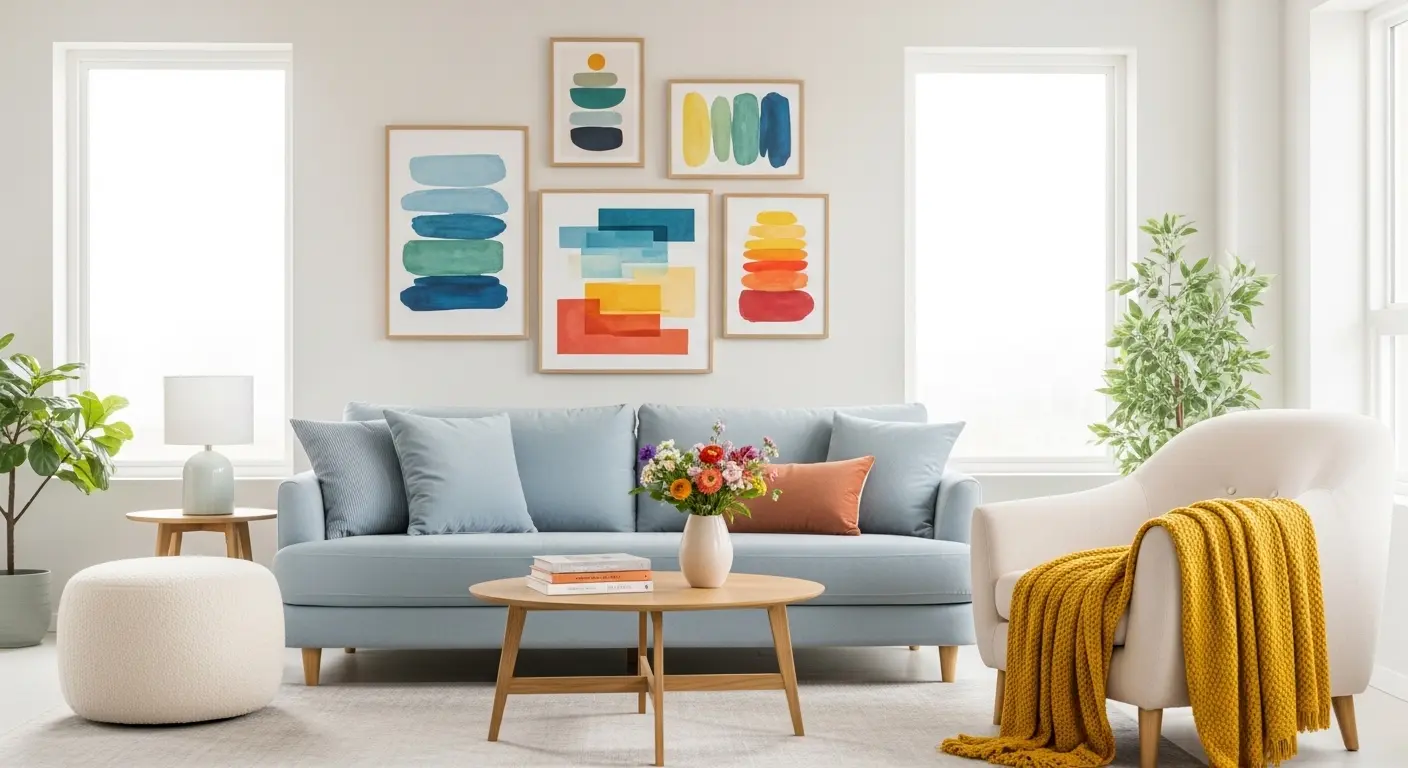
Color is one of the most powerful tools in any design project, and it is also the one most people get wrong. In NYC home design, where the pace of life outside the window is loud, the colors inside a space carry more weight than they do anywhere else. The wrong palette in a Manhattan apartment or a commercial lobby can work against the space before a single piece of furniture is placed.
Why Color Psychology Matters for NYC Home Design
Color influences human behavior and perception at a level that goes beyond personal preference. Research in environmental psychology has shown that color affects heart rate, mood, concentration, and even how large or small a space feels. This is not about picking colors that look good in a photo. It is about understanding how the people who live or work in the space will respond to it day after day.
A study published in the journal Frontiers in Psychology confirmed that color exposure produces measurable physiological and psychological responses in people. Warm colors raise arousal levels. Cool colors calm them. Neutral tones create a baseline that allows other elements in the space to take focus.
For homes in NYC, this knowledge has direct application. A co-working space in Midtown is choosing wall color, making a decision about the energy of the room. A homeowner in Brooklyn choosing a kitchen palette is shaping how the family experiences meals and mornings. The decision is never just aesthetic.
How Different Colors Work in Interior Spaces
Blue
Blue is one of the most studied colors in interior and commercial design. It lowers heart rate, reduces stress, and creates a sense of calm. In office spaces, conference rooms, and bedrooms, blue tones support focus and rest depending on the shade.
In NYC home design, blue works well in rooms that need to function as a retreat from the pace of city life. Deeper navy tones add weight and grounding to a space. Lighter blues in kitchens and bathrooms create a clean, open feeling without making the space feel cold.
For commercial interiors, blue in lobbies and waiting areas signals reliability. Banks, law offices, and healthcare spaces have used blue for decades for this reason.
Green
Green connects the space to the natural world, which, in a city like New York, where green space is limited, carries more impact than it would in a suburban setting. Green tones reduce visual fatigue and support a sense of balance.
Green works in living areas and home offices where the occupant spends extended time. It functions in a way that pulls the eye without creating the kind of stimulation that makes it hard to focus or rest. Sage, forest, and muted olive tones have gained significant ground in residential interiors over the past several years for this reason.
Yellow and Orange
Warm tones in the yellow and orange range stimulate energy and appetite. In residential kitchens and commercial restaurant interiors, these tones create conditions that encourage engagement and appetite. Yellow in a workspace raises energy levels, but in large quantities or high saturation can produce anxiety over time.
In homes, warm tones work best as accent colors rather than primary wall colors. A warm yellow on a single kitchen wall or in a dining nook creates energy in the space without the fatigue that comes from surrounding all four walls in a high-saturation warm tone.
Red
Red raises heart rate and blood pressure. In commercial settings, red is used strategically in retail and food service because it encourages quick decision-making and appetite. In residential spaces, red in large quantities becomes tiring for the nervous system over extended exposure.
Red as an accent in an entryway, a statement piece, or a small powder room creates the energy and drama the color offers without the overstimulation that comes from full room application.
White and Neutral Tones
White and near-white neutrals are the most used colors in NYC interiors, and for practical reasons. They open up small spaces visually, reflect light in apartments with limited natural light, and provide a backdrop that does not compete with views, artwork, or furniture.
The trap with white in NYC home design is choosing the wrong white. There are hundreds of whites on the market, and they range from blue-leaning to yellow-leaning to pink-leaning. In a north-facing apartment that receives cool light all day, a blue-white on the walls can make the space feel cold and clinical. A warm white in the same apartment reads as fresh and inviting.
Gray and Charcoal
Gray became a dominant interior color in the past decade and is now moving through its overuse phase. Gray works when it is used with intention rather than as a default. Warm grays with brown or taupe undertones feel livable. Cool grays in spaces with limited natural light can feel flat and heavy.
Charcoal and dark gray on accent walls or in commercial spaces create depth and grounding. In a restaurant or hotel lobby, dark tones on a feature wall create a focal point that anchors the room.
Color in Small Spaces: What Works
New York City apartments are, by the standards of most other markets, small. A 600-square-foot apartment in the West Village is not uncommon for a couple. Color decisions in small spaces have a bigger impact than in large ones because the walls are closer and the color occupies more of the visual field.
Several things hold up in practice for small space color:
- Light, warm neutrals on walls open the space and avoid the cold feeling that pure whites can produce under artificial light
- A single dark accent wall creates depth without making the room feel smaller, provided the other three walls are light
- Color continuity across an open-plan apartment creates flow and makes the overall square footage feel larger
- Color on ceilings is an underused tool; a ceiling painted the same color as the walls in a small room expands the sense of height
- Saturated tones in small bathrooms and powder rooms work because the exposure time is short and the impact is contained
Color Decisions for Residential Spaces in NYC
For residential projects, color decisions come down to one thing: how the space needs to feel for the people who live in it every day. A home in New York City is not just a place to sleep. It is where the day starts, where work happens for many people, where meals are shared, and where the noise of the city gets left at the door.
Entryways and Living Rooms
The entryway is the first thing a resident and their guests experience. In NYC home this space is often small, which means the color has an immediate impact on whether the home feels open or closed. Warm neutrals in entryways create a welcoming transition from the street. Living rooms that carry the same color family as the entryway create a sense of flow that makes the overall apartment feel larger than its square footage.
Bedrooms
The bedroom needs to support rest above everything else. Cool tones like soft blue, sage green, and warm gray lower arousal levels and prepare the nervous system for sleep. In a city where the pace outside rarely stops, the bedroom color is one of the few tools a homeowner has to create a physical separation between the city and the home.
Kitchens and Dining Areas
Kitchen design in New York apartments is often the most used room in the home. Warm tones in yellow, terracotta, and soft orange support appetite and social energy. For open-plan layouts where the kitchen connects directly to the living area, a consistent warm neutral across both spaces keeps the connection without making the kitchen feel like a separate work zone inside the home.
Light and Color Work Together
Color does not exist independently of light. The same paint color looks different in a south-facing room flooded with natural light versus a north-facing room lit by cool overhead fixtures. In NYC home design, this is one of the most common errors in the color selection process. A color is chosen from a chip in a showroom or from a screen and applied to walls in a space with different light conditions, and the result does not match what was imagined.
The correct approach is to test colors in the actual space under the actual light conditions the room experiences across different times of day. A large paint swatch on the wall, over two to three days in different light, tells more about how the color will live in the space than any digital rendering.
For commercial spaces with controlled lighting, the color selection should happen with the intended lighting system installed and operating, not under construction lighting.
Color Trends vs. Color Principles
Trends in color come and go on a cycle of roughly three to five years. All-white interiors, millennial pink, greige, and deep jewel tones have all had their moment as the default answer in design publications.
Color principles do not change. The psychological effects of warm tones, the calming properties of cool tones, and the way light interacts with saturation are consistent regardless of what color is trending in a given year.
For anyone making a long-term investment in an interior design project in NYC, anchoring the color decision in principles rather than trends produces a result that holds up over time. A kitchen in a warm neutral with a stone countertop and wood detail will look considered in ten years. A kitchen painted in whatever color was featured on the cover of a design magazine in 2023 may already feel dated.
Mistakes That Are Common in Color Selection for NYC Homes
Understanding what to do with color is helped by knowing what tends to go wrong.
- Choosing color from a screen without testing it in the space
- Painting all rooms in an apartment the same cool neutral, which creates monotony rather than cohesion
- Ignoring the undertones of white and neutral paints, which causes mismatches with flooring and fixtures
- Using high-saturation colors across an entire small room rather than as accents
- Treating color as a final decision made after everything else, rather than as a design starting point
- Following trends without considering how the color works with the architecture and light of the specific space
Color Is a Design Decision, Not a Decoration Choice
At Cucine Design Co., our team works with homeowners and commercial clients across New York City on kitchen design, bathroom renovation, and full interior projects where color is part of the conversation from the first planning session. If a space is not working the way it should and the colors feel like part of the problem, the fix starts with understanding what those colors are doing to the people inside the room.
If your space needs a rethink from the ground up, contact us to start the conversation.