
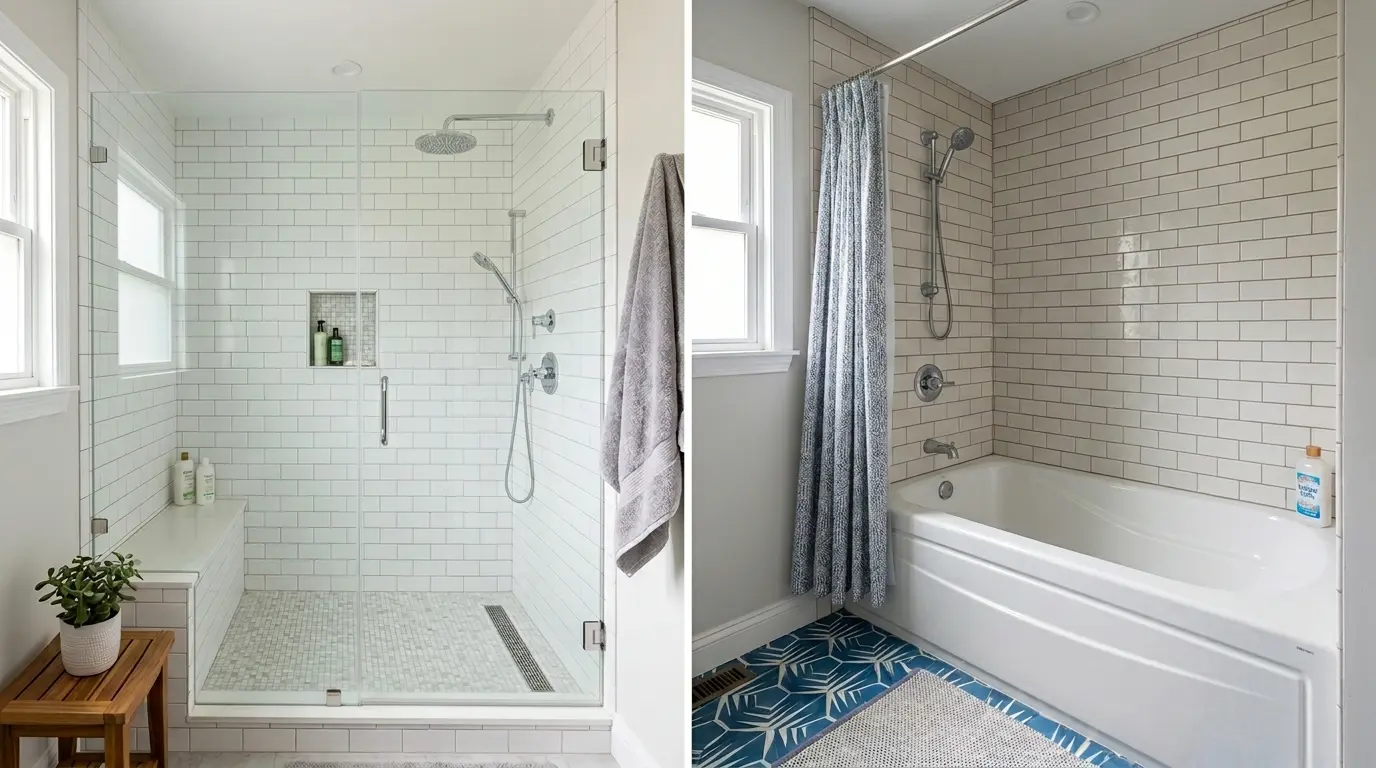
Your bathroom shapes how you start your mornings and end your nights. A good bathroom feels relaxing, practical, and comfortable at the same time. When homeowners plan a remodel, one question comes up again and again: Should you install a walk-in shower or keep a bathtub?
Both options offer benefits; a walk-in shower creates a modern and open feel, while a bathtub brings comfort and a traditional touch. The right choice depends on your lifestyle, bathroom size, budget, and long-term goals.
If you are planning a bathroom renovation in NYC, let’s discuss what is best for you: a walk-in shower or a bathtub.
The Difference Between a Walk-In Shower and a Bathtub
A walk-in shower gives you a shower space without the need to step over a high edge. Most designs include a glass enclosure or an open layout. Many homeowners choose sleek tile work, rainfall showerheads, built-in benches, and storage niches to create a modern look.
A bathtub gives you a deep basin where you can sit and soak. Traditional tubs often include a shower combination, while freestanding tubs focus more on luxury and design.
At first glance, the decision may seem simple. But once you think about comfort, cleaning, accessibility, and home value, the choice becomes more important.
Why Walk-In Showers Have Become So Popular
Walk-in showers have grown in popularity over the last decade. Modern homes now focus on clean lines, open spaces, and minimal designs. A walk-in shower fits perfectly into that style.
Many homeowners also want convenience. A shower saves time during busy mornings. You can step in quickly, shower comfortably, and move on with your day.
Another reason people choose walk-in showers involves bathroom size. Smaller bathrooms often feel cramped with a bulky tub. A glass shower enclosure creates a more open appearance and helps the room feel larger.
Homeowners also enjoy the custom design options. You can create a shower that matches your style and needs. Some people install natural stone tiles for a spa-like feel. Others choose black fixtures and frameless glass for a modern look.
Walk-in showers also support aging in place. Many older adults prefer low-entry showers because they reduce the risk of slipping while stepping over a tub wall.
Also Read: 10 Signs It's Time to Renovate Your Bathroom
The Comfort and Appeal of Bathtubs
Even with the rise of modern showers, bathtubs still hold strong value in many homes. A bathtub creates a relaxing experience that a shower cannot fully replace.
After a stressful day, many people enjoy soaking in warm water to relax muscles and calm the mind. Families with young children also find tubs more practical for bath time.
Bathtubs can also make a bathroom feel elegant and luxurious. Freestanding tubs often become the centerpiece of high-end bathroom designs. They create a timeless look that never feels outdated.
Some homeowners simply love the comfort of a long soak. For them, removing the tub would take away an important part of their routine.
Real estate value also plays a role. Many buyers prefer homes with at least one bathtub, especially families with children. Removing every tub in the house may hurt resale appeal in some markets.
Space Matters More Than You Think
Bathroom size can strongly influence your decision. A walk-in shower often works better in compact bathrooms. The open layout creates more visual space and helps the room feel less crowded. Frameless glass showers make a small bathroom appear brighter and larger.
Bathtubs usually need more room. A freestanding tub takes up even more floor space and works best in larger bathrooms where you want a luxury layout.
If your bathroom already feels tight, a tub may limit movement and storage options. In that case, a walk-in shower may create a better flow.
On the other hand, if you have a spacious master bathroom, you may have enough room for both. Many homeowners now combine a large walk-in shower with a separate soaking tub to create a spa-inspired design.
Daily Lifestyle Should Guide Your Decision
Your everyday habits matter more than trends.
Think about how you actually use your bathroom. Do you enjoy long baths, or do you prefer quick showers? Do you have children or pets that need bathing? Do you plan to stay in your home for many years?
A walk-in shower works well for people with fast-paced routines. It offers easy access, quick cleaning, and efficient use of space.
A bathtub works better for people who value relaxation and comfort. Families also find tubs more useful during early childhood years.
Older homeowners often choose walk-in showers for safety reasons. The low threshold reduces tripping hazards and makes movement easier.
Young professionals and couples may lean toward modern shower designs because they match contemporary lifestyles.
Your bathroom should support your real life, not just current design trends.
Cleaning and Maintenance Differences
Cleaning often becomes an overlooked factor during bathroom remodeling. Yet it affects your daily life long after the renovation ends.
Walk-in showers usually require regular cleaning because glass panels can collect water spots and soap residue. Tile grout also needs attention to prevent mold and buildup.
However, modern materials make maintenance easier than before. Large-format tiles, quality sealants, and frameless glass reduce cleaning time.
Bathtubs also need routine cleaning, especially around corners and edges where grime can build up. Tub-and-shower combinations often create more cleaning challenges because of the curtain or sliding door tracks.
Freestanding tubs can become difficult to clean around the base if they sit too close to the wall.
In general, maintenance depends more on design quality and materials than on the fixture itself. A well-designed shower or tub can stay beautiful with simple routine care.
Safety and Accessibility Considerations
Safety should never become an afterthought.
Walk-in showers offer easier access for people with mobility concerns. Many designs include slip-resistant flooring, grab bars, built-in seating, and handheld showerheads for extra comfort.
A tub requires stepping over a high wall, which increases the risk of slips and falls. This challenge becomes more important as homeowners age.
Families with elderly relatives often choose walk-in showers because they create a safer environment.
Accessibility also matters for long-term planning. If you plan to stay in your home for decades, a walk-in shower may support future needs better than a traditional tub.
That does not mean tubs lack value. Many homeowners safely enjoy bathtubs for years. But accessibility should play a role in your decision if mobility concerns exist now or may appear later.
Cost Comparison Between Walk-In Showers and Tubs
Budget often shapes bathroom remodeling choices.
The final price depends on materials, plumbing, labor, and custom features. A basic bathtub installation may cost less than a luxury walk-in shower with custom tile work and glass panels.
However, high-end freestanding tubs can also become expensive.
A standard walk-in shower with quality materials often falls within a moderate price range. Costs rise when homeowners add luxury upgrades such as rainfall systems, steam features, body sprays, or premium tile.
Bathtubs also vary widely in price. Acrylic tubs cost less, while cast iron and stone resin models cost more.
You should also think about long-term value. A well-designed bathroom renovation can increase home appeal and improve daily comfort.
Instead of focusing only on upfront cost, think about which option will serve you best over time.
Which Option Adds More Home Value?
Many homeowners ask whether a walk-in shower or tub improves resale value more.
The answer depends on the local market and your home layout.
In many modern homes, buyers love large walk-in showers. They create a luxury feel and match current design preferences. Updated showers often attract younger buyers who value convenience and style.
At the same time, many families still want at least one bathtub in the house. Parents with small children often see tubs as essential.
If your home has multiple bathrooms, keeping one tub while upgrading another space with a walk-in shower often creates the best balance.
Removing the only tub in your home may limit buyer interest in some cases.
A smart remodel considers both your current needs and future resale goals.
Design Flexibility and Style Options
Walk-in showers give homeowners endless design flexibility.
You can create a sleek modern style with frameless glass and large tiles. You can also design a rustic shower with textured stone and warm wood accents. Open-concept showers create a spa atmosphere that feels bright and luxurious.
Storage options also improve with walk-in showers. Built-in niches and benches add function without clutter.
Bathtubs also offer strong design potential. Freestanding tubs create a bold visual statement and bring elegance to master bathrooms. Clawfoot tubs add vintage charm, while modern soaking tubs create a clean and relaxing atmosphere.
The best choice depends on your design vision.
If you want a highly customized modern look, a walk-in shower may offer more flexibility. If you want a relaxing centerpiece, a tub may fit better.
Water Usage and Efficiency
Water efficiency matters to many homeowners today.
A shower often uses less water than a full bathtub. Quick showers can help lower water bills and reduce energy usage.
However, water use depends on habits. Long showers may consume more water than a moderate bath.
Modern showerheads now support water-saving technology without reducing comfort. Many homeowners choose eco-friendly fixtures to improve efficiency.
Bathtubs naturally require more water to fill completely. Large soaking tubs use even more.
If sustainability and utility savings matter strongly to you, a walk-in shower may support those goals better.
Should You Choose Both?
If space and budget allow, combining a walk-in shower and bathtub creates the best of both worlds.
This setup offers flexibility, comfort, and strong resale appeal. You can enjoy fast daily showers while still having a tub for relaxation or family use.
Luxury bathrooms often include both because homeowners want convenience without sacrificing comfort.
A separate shower and tub also create a more upscale appearance that many buyers appreciate.
Of course, not every bathroom has enough space for both features. But if your layout supports it, the combination may give you the most long-term satisfaction.
Also Read: Porcelain vs Ceramic Tile: Which Is Best for Bathrooms?
How to Make the Final Decision
You do not need to follow trends blindly. Focus on what fits your lifestyle.
Ask yourself a few practical questions:
- Do you take baths often?
- Do you have children?
- Do you plan to age in place?
- Is your bathroom large or compact?
- Do you care more about luxury, convenience, or resale value?
A walk-in shower offers modern style, accessibility, and efficient use of space. A bathtub provides comfort, relaxation, and family-friendly function.
Neither option works for everyone. The right choice depends on your daily routine and future plans.
A successful bathroom remodel balances beauty with practicality.
Transform Your Bathroom With Cucine Design NYC
If you want a bathroom that blends comfort, beauty, and smart functionality, Cucine Design NYC can help bring your vision to life.
Cucine Design NYC specializes in high-end bathroom and kitchen remodeling with a focus on modern design, quality craftsmanship, and personalized service. Whether you want a sleek walk-in shower, a luxurious soaking tub, or a complete bathroom transformation, our expert team works closely with you to create a space that fits your lifestyle and design goals.
Call us now and let’s start your bathroom renovation in NYC.