
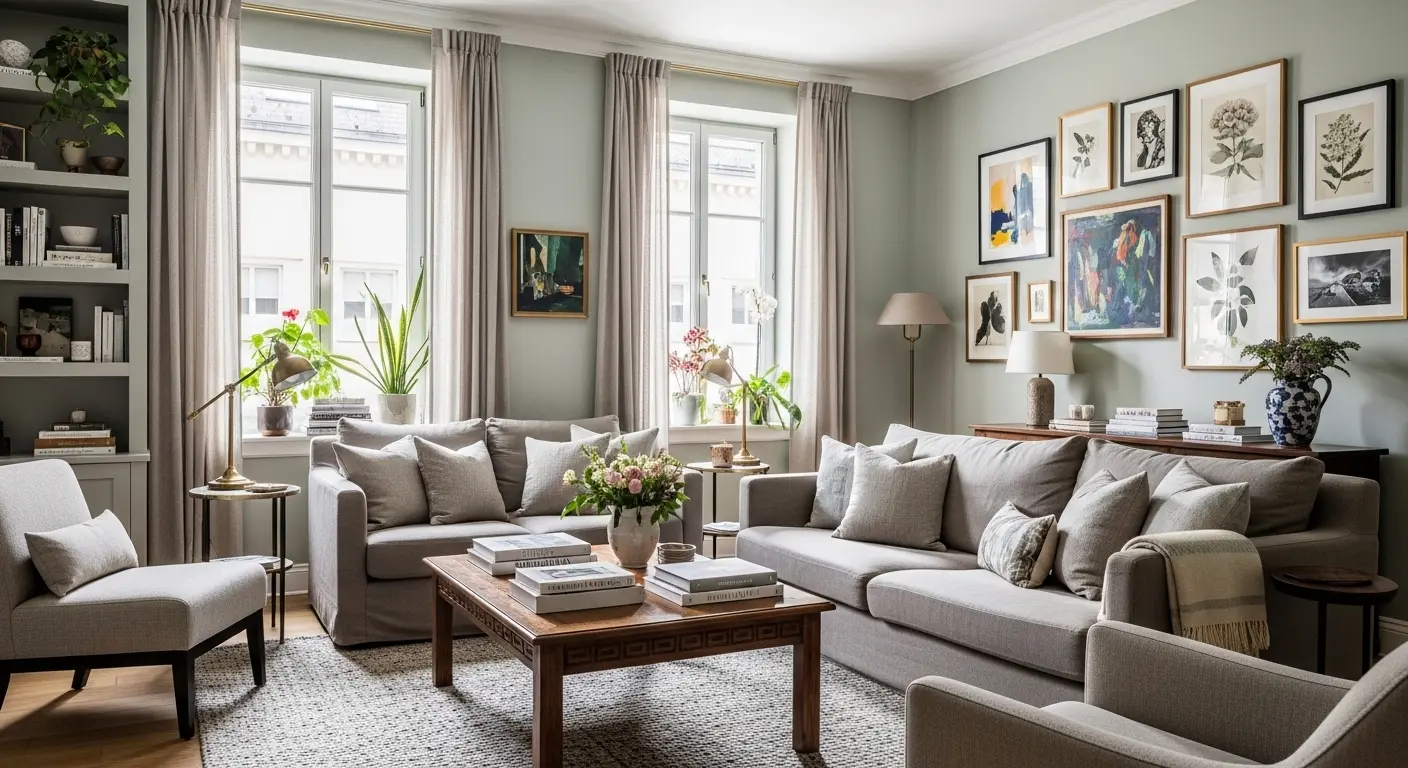
We’ve taken it upon ourselves to debunk some myths, including the idea that interior design is simply about making rooms pretty. That couldn’t be further from the truth.
There’s a lot that goes on behind on Instagram and Pinterest-worthy pictures, and it’s all thanks to working with an impeccable interior designer in NYC.
So what exactly do interior designers do all day? Turns out, it's way more complex than most people realize.
Interior Designing is More Than Making Things Look Pretty
Interior design isn't the same as interior decorating. Decorators focus on aesthetics, such as choosing the right furniture, picking suitable colors, and styling accessories. While that’s valuable work, no shade, interior designers are hired to do something fundamentally different.
Interior designers are trained professionals to understand how spaces function. That means they understand building codes, read architectural plans, and coordinate with contractors, architects, and engineers to make sure your renovations or remodels won’t violate any safety regulations. Interior designers also source materials from suppliers for you, cutting your headaches in half.
How Real Interior Designing Work Starts
When you first reach out to an interior designer in NYC, they're not immediately pulling paint colors. The initial phase involves a lot of listening, questioning, and investigating.
This is what’s referred to as the discovery conversation, and it’s where everything begins. A good designer will always start with understanding how you live. They’ll probably ask you questions such as what you despise about your current space, what you love, and what your realistic budget is.
Next comes the site assessment. The designer visits your space, taking detailed measurements, photographs, and notes. They're looking at things you'd never notice. Such as how natural light moves through the rooms at different times of day, where the structural columns are located, how the HVAC system is laid out, and what the electrical capacity is.
At this point, they’re also busy mapping out the logistics of how to fit furniture pieces through narrow hallways and any awkward turns.
Creating the Vision
Once the designer understands your needs and space, they move into the conceptual design phase.
The first major task is space planning. This involves figuring out the optimal layout for your rooms so you don't overcrowd them or make them feel cramped. This is particularly important in apartments in the Big Apple since you’re almost always working with limited square footage and weird layouts.
The next order of business is developing a design concept. This involves lots of mood boards, sketches, and initial renderings. Now is when the designer is establishing the overall mood and aesthetic of the room. Designers typically use software such as CAD, Computer-Aided Design, and BIM, Building Information Modeling, to create detailed plans and 3D visuals.
The Development Phase
The design development phase is when your interior designer nails down every single specification.
Materials and finishes need to be selected for everything. This includes flooring, wall treatments, countertops, cabinetry, tile, lighting fixtures, plumbing fixtures, and hardware.
Hunting, picking, and sourcing for furniture, fixtures, sounds simple until you realize that it’s a lot of hard work. Designers have access to trade-only showrooms and manufacturers that aren't available to the general public. They know which vendors are reliable, which ones have quality control issues, and how to negotiate pricing.
The development phase is also where budgeting typically takes place. Designers track costs, get quotes from vendors and contractors, and flag when you’re about to go above and beyond your set budget.
The Documentation Phase
Once design decisions are finalized, someone has to communicate all of this to the people who'll actually build and install everything. That's where construction documentation comes in.
Construction drawings include floor plans, elevations, lighting plans, electrical layouts, and plumbing layouts. These drawings include accurate dimensions and installation notes. These documents need to be compliant with building codes. Thankfully, your designer handles all that by coordinating with architects and engineers.
It’s also important to include material and finish schedules in these documents. Each item includes the manufacturer, product name, model number, color, finish, where it's being used, quantity needed, and ordering information. This is what contractors use to purchase and install the right materials in the right places.
Also Read: How to Mix Textures and Materials Like a Professional Designer
Managing All the Chaos
Design is only half the job. The other half is project management.
The real chaos involves managing and coordinating vendors and contractors. This involves a whole lot of back and forth, getting bids, reviewing proposals, and overseeing contracts. Any interior designer worth their salt already has a list of general contractors up their sleeves that do quality work.
Timelines and scheduling also require constant oversight. Materials need to be ordered months in advance. Demolition will always happen first, then the carpentry, followed by electrical and plumbing, painting, and then final touches such as floors, fixtures, and furniture. Everything has to happen in the right sequence, and delays in one area create ripple effects everywhere else.
But if you thought that was all, we’d like to stop you right there. Chaos is incomplete without endless job site meetings, reviewing progress, addressing questions, and solving problems that inevitably arise.
Installation and Styling
This is the final stretch. As construction wraps up, the designer shifts focus to bringing in everything and tying it all together.
Once everything’s been ordered, interior designers typically coordinate storage if items arrive before the space is ready, and schedule installations. On installation day, they’ll make sure everything happens perfectly. What looks effortless in the final photos is usually the result of hours of precise placement, adjustment, and styling.
When everything is complete, now’s the time for a final walkthrough. Your interior designer will walk through the entire space with you, making sure you’re happy with everything.
Why Does Understanding What an Interior Designer Does Matter for Your Project?
You’re probably wondering what you’ve got to do with the day-to-day realities of an interior designer. The truth is, knowing and understanding what interior designers actually do helps you work with them more effectively and get the most out of your money.
If you’re hiring an interior designer in NYC, you’re not just paying someone to do the easy stuff for you. You’re hiring a:
- Project manager who keeps everything on track
- A translator who converts your vague ideas into actionable designs
- Problem-solver who navigates unexpected challenges
- Negotiator who has access to industry relationships to get better pricing
- Technical expert who understands structural requirements
- Creative professional who brings fresh perspectives
- Quality control manager who makes sure work meets professional standards
People often assume that interior design is the simplest job out there. But that’s not true at all. In fact, the best designers make it look easy because they’re incredibly good at it! But behind all that fineness, there are years of experience, expertise, and a whole lot of chaos that most people never see.
So, whether you can appreciate that or not is entirely up to you. But one thing’s for sure, knowing what an interior designer is actually trained to help you with makes things a lot easier for you! Now that you’ve understood the full scope of their work, you can learn to delegate tasks to them and leave it to your designer to figure out!
Is it Time You Hired an Interior Designer for Your Space?
Interior design is a profession that requires creativity, technical knowledge, project management skills, business know-how, and the ability to juggle a hundred details while keeping the big picture in mind.
It's not about having good taste, though that definitely helps. It's about translating a client's vision into a beautiful reality that’s within the client’s budget and managing the complex process of bringing it all to life.
When you work with a professional interior designer, you're tapping into years of training and experience that go far beyond what you see in the finished space. You're hiring someone who will make your life easier, save you money in the long run, and create a space that works better and looks better than you could achieve on your own.
Cucine Design NYC is in your corner to end your endless search for the right interior designer in NYC! With us, you get decades worth of expertise in every single project. Whether you’re renovating your apartment or designing a new space from scratch, we manage every detail so you don't have to.
At the end of the day, that’s what we’re really here for! Helping you bring your vision to life without all the drama, headaches, stress, and mistakes that come from trying to figure it all out yourself.
Give us a shout today!