
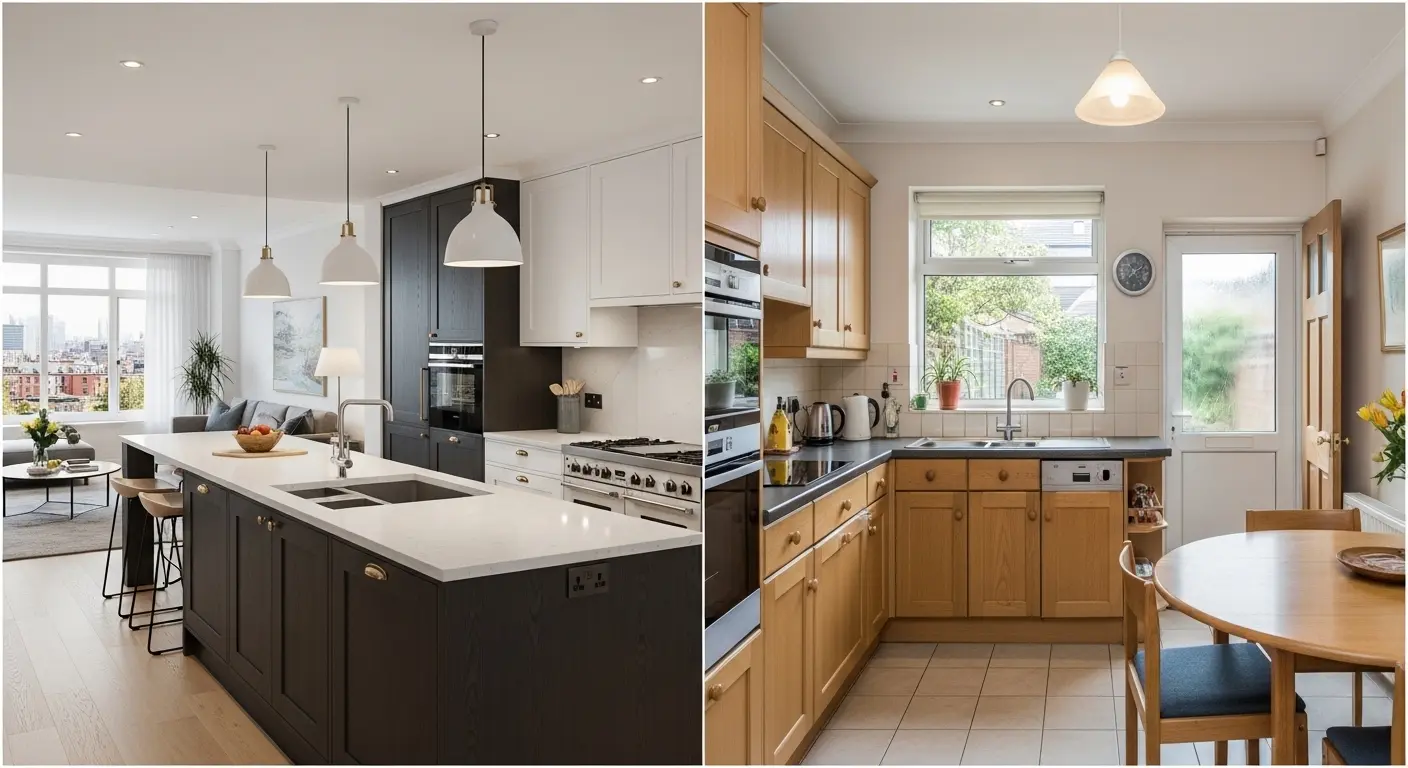
Kitchen renovation in NYC today involves something more than picking cabinets and countertops. The layout shapes how a home feels, how people interact, and how daily life flows. Among all design choices, the debate between open kitchens and closed kitchens stands out. Each style carries its own rhythm, benefits, and limitations. The right choice depends on lifestyle, family habits, cultural preferences, and even cooking style.
Let’s have a look at both kitchen types. It explores how they function in homes, how they influence daily routines, and which one suits modern living better.
The Open Kitchen Concept
An open kitchen removes walls that traditionally separate cooking areas from living or dining spaces. It blends the kitchen into your home. Instead of isolation, it invites connection.
In modern homes, this design often links the kitchen with a lounge or dining room. You might see a central island acting as both a workspace and a social hub. People cook, talk, and relax in the same shared space.
Open kitchens reflect a shift in how families live. People no longer want the cook hidden away. They prefer a layout that allows interaction while preparing meals.
Features of an Open Kitchen
- No full walls separate the kitchen from the living areas
- Seamless visual connection with the rest of the home
- Kitchen islands or breakfast bars as focal points
- Shared lighting and flooring design
- Multi-functional use of space
The Closed Kitchen Layout
A closed kitchen follows a more traditional approach. It separates the cooking area from the rest of the house using walls and doors. This design creates a distinct, self-contained workspace.
In many cultures, especially where cooking involves strong spices, oils, or long preparation processes, closed kitchens remain popular. They offer privacy and control.
A closed kitchen allows the cook to focus fully without distractions. It also keeps the rest of the house unaffected by cooking noise or smells.
Features of a Closed Kitchen
- Fully enclosed space with walls and doors
- Dedicated cooking zone separate from living areas
- More storage-focused layouts
- Limited visibility from outside
- Stronger control over ventilation
Also read: Why European Kitchen Cabinets Are Taking Over Modern Homes
Lifestyle and Daily Living: How Each Kitchen Feels
The difference between open and closed kitchens appears in everyday life.
An open kitchen creates a lively environment. It allows family members to stay connected. Someone cooking can talk to guests or keep an eye on children. It feels social and inclusive.
A closed kitchen creates a focused environment. It gives the cook privacy. It reduces distractions. It suits people who enjoy cooking as a dedicated activity rather than a shared one.
When Open Kitchens Shine
- Families who enjoy spending time together
- Homes where entertaining guests often happens
- Small homes that need visual openness
- People who like multitasking while cooking
When Closed Kitchens Work Better
- Homes with heavy or frequent cooking
- People who prefer privacy while working
- Families who want a clean, quiet living space
- Situations where the mess needs to stay hidden
Space and Layout: Making the Most of Your Home
Space plays a huge role in choosing the right kitchen type.
Open kitchens often make small homes feel larger. Removing walls creates a sense of openness. Light flows more freely, and the entire space feels less restricted.
Closed kitchens, on the other hand, make better use of vertical storage. Since the walls remain intact, cabinets can extend across every surface. This allows more storage and organization.
Space Considerations
- Open kitchens expand visual space
- Closed kitchens maximize storage space
- Open layouts suit apartments and smaller homes
- Closed layouts suit larger homes with separate zones
Cooking Habits and Cultural Influence
Cooking style matters more than most people realize. In homes where cooking involves frying, grilling, or heavy spices, an open kitchen may spread smells throughout the house. Smoke and oil particles can affect furniture and fabrics.
Closed kitchens contain these elements. They keep strong smells inside and make cleaning easier in the long run.
In contrast, homes with lighter cooking habits adapt well to open kitchens. Less smoke and fewer odors make shared spaces more comfortable.
Cooking Style Impact
- Heavy cooking favors closed kitchens
- Light cooking suits open kitchens
- Frequent cooking needs better ventilation in open layouts
- Traditional cooking often aligns with closed spaces
Social Interaction and Family Dynamics
Open kitchens encourage communication. They turn cooking into a shared experience. A parent can help with homework while preparing dinner. Friends can gather around the island and chat.
Closed kitchens create boundaries. They separate cooking from social interaction. This can reduce distractions and create a quieter living area.
The choice depends on how a family interacts. Some families enjoy constant connection. Others prefer defined spaces for different activities.
Social Dynamics
- Open kitchens increase interaction
- Closed kitchens create personal space
- Open layouts support modern, casual living
- Closed layouts support structured routines
Cleanliness and Maintenance
Every kitchen gets messy. The difference lies in how visible that mess becomes.
Open kitchens expose everything. Dirty dishes, cluttered counters, and cooking mess stay visible to everyone. This often pushes homeowners to clean more frequently.
Closed kitchens hide the mess. You can close the door and deal with cleaning later. This offers flexibility but can also lead to delayed maintenance.
Maintenance Reality
- Open kitchens require constant tidiness
- Closed kitchens allow flexible cleaning routines
- Open layouts make clutter visible
- Closed layouts contain the mess
Noise Control and Comfort
Cooking generates noise. Appliances, chopping, and cleaning all contribute. In an open kitchen, this noise spreads into living areas. It can disturb conversations, TV time, or relaxation.
Closed kitchens keep noise contained. They create a quieter environment for the rest of the house.
Noise Factors
- Open kitchens spread sound
- Closed kitchens reduce noise impact
- Open layouts suit active households
- Closed layouts suit quieter lifestyles
Ventilation and Air Quality
Ventilation becomes more critical in open kitchens. Without walls, smoke and smells travel easily. A strong exhaust system becomes essential.
Closed kitchens naturally contain smoke. Even a moderate ventilation system works effectively because the space remains enclosed.
Air Quality Considerations
- Open kitchens need powerful ventilation
- Closed kitchens manage airflow more easily
- Open layouts demand careful planning
- Closed layouts offer natural containment
Design Flexibility and Aesthetics
Open kitchens demand a cohesive design. Since they connect with living areas, every element must match. Cabinets, colors, and materials should blend with the rest of the home.
Closed kitchens allow more freedom. You can experiment with bold colors or unique designs without affecting the rest of the house.
Design Freedom
- Open kitchens require consistent styling
- Closed kitchens allow creative experimentation
- Open layouts focus on minimalism
- Closed layouts support diverse designs
Also read: Modern vs Traditional Kitchen Design: Which Is Right for You?
Property Value and Market Trends
Modern buyers often prefer open kitchens. They associate them with contemporary living and spacious design. Open layouts can increase appeal in urban markets.
However, closed kitchens still hold strong value in regions where traditional cooking remains common. Buyers in these areas may prioritize functionality over openness.
Market Insights
- Open kitchens attract modern buyers
- Closed kitchens appeal to practical needs
- Market preference varies by region
- Lifestyle trends influence resale value
Safety and Practical Considerations
Safety matters, especially in homes with children.
Open kitchens expose cooking areas. Children can easily access stoves or sharp tools. This requires careful supervision and safety measures.
Closed kitchens create a barrier. Doors can restrict access and reduce risks.
Safety Points
- Open kitchens need strict supervision
- Closed kitchens offer controlled access
- Open layouts require child-proofing
- Closed layouts provide natural safety boundaries
Cost and Renovation Factors
Transforming a kitchen layout can involve a high cost. Open kitchens often require removing walls, adjusting electrical systems, and redesigning spaces. This increases renovation expenses.
Closed kitchens usually cost less to maintain. They require fewer structural changes.
Cost Overview
- Open kitchens involve higher renovation costs
- Closed kitchens remain budget-friendly
- Open layouts need structural modifications
- Closed layouts focus on internal upgrades
Hybrid Kitchens: The Middle Ground
Many modern homes now adopt a hybrid approach. This design combines elements of both open and closed kitchens.
Sliding doors, glass partitions, or semi-open layouts allow flexibility. You can open the space when needed and close it during heavy cooking.
This approach offers the best of both worlds. It balances openness with control.
Hybrid Benefits
- Flexible space usage
- Controlled visibility
- Improved ventilation options
- Balanced lifestyle experience
Which One Works Best for Modern Homes?
No single answer fits every home. The ideal choice depends on how you live.
Choose an open kitchen if you value connection, openness, and modern aesthetics. It suits families who enjoy social interaction and lighter cooking routines.
Choose a closed kitchen if you prefer privacy, control, and practicality. It works well for traditional cooking styles and structured living.
If you want flexibility, a hybrid kitchen stands as a smart solution. It adapts to changing needs without compromising on comfort.
Planning Kitchen Remodeling or Renovation in NYC? Let’s Get Started
If you are planning kitchen remodeling, Cucine Design NYC has you covered. Our expert designers have the skills to design any type of kitchen, whether open or closed. We work closely with our client and remodel according to your requirements.
Call us now and get a free quote.